

What Is Time Management? A Practical Guide to Using Your Time Well
Time management is the practice of deciding how you will use your time, then following that decision with enough flexibility for real life. It is not about filling every minute or working at maximum speed. It is about giving attention to what matters, completing necessary work, and leaving room for rest, relationships and unexpected changes.
You cannot create extra hours in a day, but you can make clearer choices about your commitments. A good system helps you see what needs doing, recognise what can wait, and avoid carrying every reminder in your head. That can make a busy week feel more manageable, even when your workload does not disappear.
There is no single perfect method. Your work, energy, family life and preferences all shape what will be useful. The aim is to build a simple, repeatable way to plan, focus, review and adjust.
What time management really means
Time management combines planning, prioritising and acting. Planning gives your tasks a place. Prioritising helps you decide which task deserves attention first. Acting means protecting enough time to begin and finish, rather than endlessly rearranging a list.
It also includes managing your attention and energy. Two free hours are not always equally useful. You may write clearly in the morning, deal with routine admin after lunch, and need a pause before making a difficult decision. A realistic plan takes those differences into account.
It is a decision-making skill
Every yes uses time that cannot be used elsewhere. Managing time therefore means choosing between competing demands. You decide what is essential today, what supports a longer-term goal, what can be delegated, and what does not need doing at all.
This can feel uncomfortable because many tasks appear urgent. A plan gives you a reasoned answer when another request arrives: you can accept it, postpone it, shorten it or decline it with a clear view of your existing commitments.
It is not a test of personal worth
An unfinished list does not mean you have failed. Lists often contain more work than a day can hold, and interruptions are part of normal life. A useful system shows reality rather than judging you for it.
Treat your plan as a guide, not a contract written in stone. If your day changes, move the task deliberately. That is different from ignoring it and hoping you will remember it later.
Why managing your time matters
Without a clear overview, the loudest task often wins. Messages, small requests and routine chores can take over while important work remains untouched. Time management creates a pause between receiving a demand and reacting to it.
It can also reduce the friction of getting started. When you already know the next small action, you spend less time deciding what to do and more time doing it. This is especially helpful on days when your concentration is limited.
It connects daily actions with bigger priorities
Goals such as changing career direction, learning a skill, improving finances or making time for friends need regular space in the week. If they only exist as good intentions, urgent daily work will usually push them aside.
Look for small, specific actions that move a priority forward. Instead of writing “work on portfolio”, write “choose three projects for the portfolio”. The task becomes easier to schedule and easier to begin.
It protects rest as well as productivity
A crowded timetable is not necessarily a well-managed one. Travel, meals, recovery, exercise, household jobs and unplanned conversations all take time. Leaving space for them makes your plan more believable.
Rest is also part of sustainable planning. If you schedule demanding work without breaks or recovery, your system may look efficient on paper but become hard to maintain. Include personal time with the same care you give appointments.
Core principles for a workable system
Good time management is usually less about finding a clever tool and more about applying a few basic principles consistently. Keep the system visible, make tasks concrete, and review it often enough that it stays trustworthy.
Start with fewer categories and rules than you think you need. If capturing a task takes too long, you will stop doing it. If a daily plan has too many moving parts, you will spend your focus on maintaining the plan instead of living it.
- Capture tasks in one trusted place before they disappear from memory.
- Write actions, not vague topics: “send the draft” is clearer than “draft”.
- Choose a limited number of priorities for each day.
- Estimate generously and leave gaps between commitments.
- Review unfinished tasks instead of copying them automatically.
Make tasks small and observable
A task should describe an action you can see yourself doing. “Sort out the website” may hide many separate decisions. Break it into actions such as checking broken links, choosing images and writing a contact page.
Smaller tasks reveal the real work and make it easier to choose a first step. They also help you notice when a project needs a proper planning session rather than another item on today’s list.
Plan for capacity, not an ideal day
Consider meetings, travel, caring responsibilities and the time needed to switch between types of work. A day with several appointments has less usable focus time than it first appears to have.
It is wise to plan only part of your available time. The remaining space absorbs delays, questions and tasks that take longer than expected. A shorter completed plan is more useful than an ambitious plan that creates constant carry-over.
Methods that can help you choose and focus
Methods are tools, not rules. Try one for a week or two and keep the parts that genuinely help. You can combine them: for example, use a priority matrix during your weekly review and focus intervals while doing the chosen task.
The best approach is usually the one you can use on an ordinary Tuesday. It should still work when you are tired, interrupted or away from your desk.
The Eisenhower Matrix and the Pareto principle
The Eisenhower Matrix sorts work by urgency and importance. Important and urgent tasks need attention soon. Important but not urgent tasks need a place in your schedule. Urgent but less important tasks may be shortened, delegated or handled in batches. Tasks that are neither can often be removed.
The Pareto principle is a prompt to look for the smaller group of actions that produces much of the value. It does not mean every outcome follows an exact formula. It asks a practical question: which few tasks would make the biggest difference this week?
Pomodoro, time blocking and the two-minute rule
The Pomodoro technique uses a short, protected focus period followed by a brief break. You can adjust the length to suit the task. It is useful when starting feels difficult or when a large piece of work needs a clear boundary.
Time blocking assigns parts of the day to types of activity, such as focused work, admin, errands or planning. The two-minute rule is simpler: if a genuinely small task takes about two minutes, do it now. Do not use it to avoid more important work by clearing easy tasks all day.
Lists and reviews: turning plans into a routine
A task list is useful when it answers a question: what do I need to remember, and what will I do next? It becomes less helpful when it is a long, mixed record of hopes, projects, errands and tasks with no dates or priorities.
Separate your master list from your daily list. The master list holds everything you may need to do. Your daily list holds the few actions you realistically intend to address today. This distinction keeps the day from being overwhelmed by the whole month.
Build lists that you can read quickly
Group tasks in a way that supports action. You might use work, home, errands and waiting-for, or organise by project. Avoid creating so many labels that adding a task becomes a chore.
Give time-sensitive commitments a date, but do not turn every task into a deadline. A task with no real due date can remain on a next-actions list until you decide when it deserves a slot.
Use a weekly review to reset
Once a week, look ahead at appointments, deadlines and personal commitments. Check your master list, close completed items and decide which projects need attention in the coming days. This is also a good moment to prepare for tasks that require materials or other people.
Then look back briefly. Which plans were realistic? Where did time disappear? Which recurring task needs a better routine? The point is not to criticise yourself. It is to improve the next plan using what actually happened.
Common mistakes and how to begin
Many time-management problems come from trying to use a system that is too strict, too complicated or too disconnected from everyday life. The solution is often to simplify, not to add another layer of tracking.
Begin with observation. For a few days, notice how long regular activities take and when you have the most useful energy. You do not need to record every minute. A rough picture is enough to make more realistic choices.
Mistakes that make planning harder
One common mistake is treating every task as equally important. Another is making a huge daily list, then feeling behind before midday. Constantly switching between tasks, checking messages without limits and forgetting transition time can also fragment the day.
Overplanning is another trap. A tightly packed schedule leaves no room for a delayed call, a difficult conversation or a moment of low energy. Add buffers, choose fewer priorities and move unfinished work consciously during your review.
A simple way to start this week
First, collect all current tasks and commitments in one place. Next, choose two or three priorities for the week. Break each one into clear next actions. Then block a small amount of time for those actions, alongside your fixed appointments and personal needs.
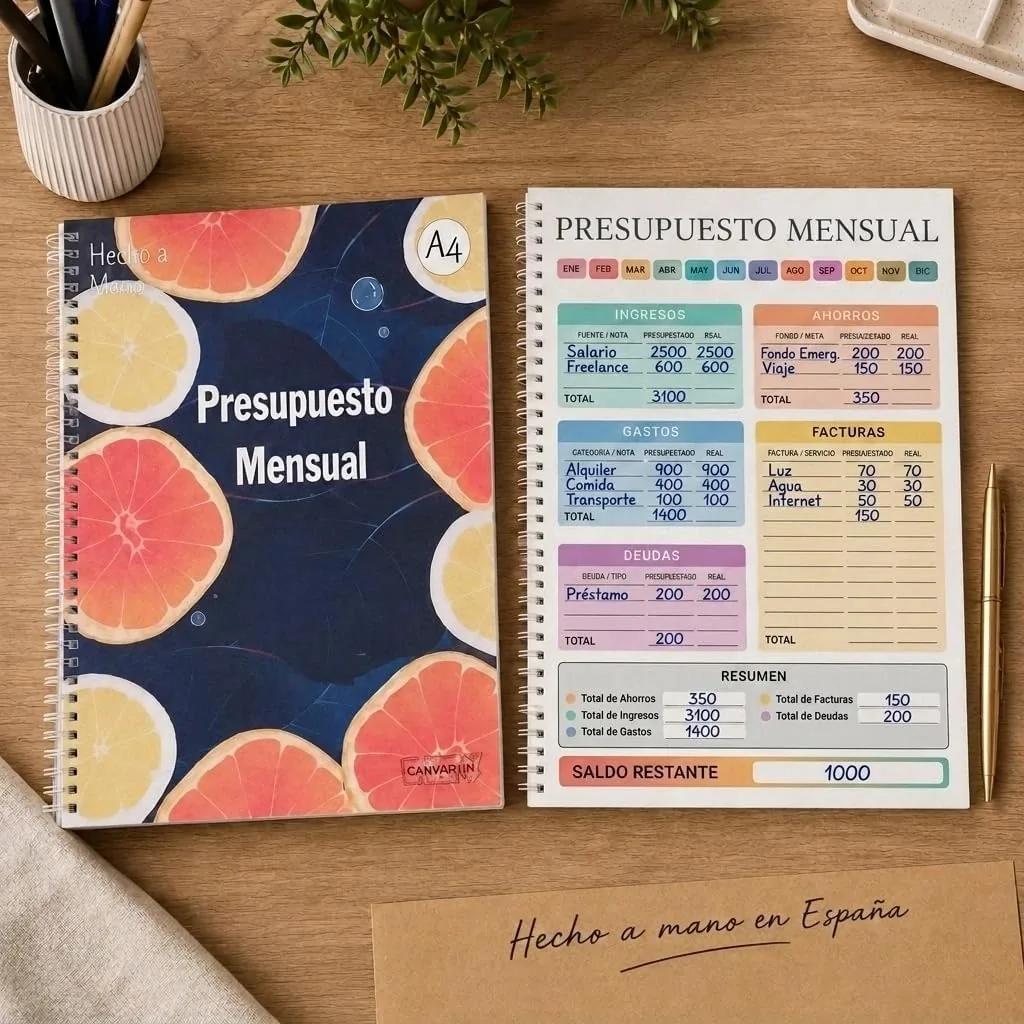
At the end of each day, spend a few minutes checking what is complete and selecting tomorrow’s priorities. At the end of the week, review and adjust. A paper planner can make this feel tangible; an app can help when you need your plan with you. Canvartin offers undated paper planners and an app where your planners sit on digital shelves, so you can use either format or combine both.
In summary
Time management is the practical habit of choosing what deserves your time, giving it a realistic place in your week, and reviewing the plan as life changes. It is not about doing everything. It is about seeing your commitments clearly and making intentional trade-offs.
Start small: keep one trusted list, select a few daily priorities, protect a focus block and hold a short weekly review. Test methods such as time blocking, the Eisenhower Matrix or Pomodoro when they solve a real problem. Over time, your system can become simpler, clearer and more suited to the way you actually live and work.