
Weekly batch cooking means cooking most of the week's food in a single session, usually two to three hours. You prepare building blocks (legumes, rice, roasted vegetables, sauces, meat or fish) that you then combine into different dishes from Monday to Friday, so each day you only need to assemble, reheat or finish something in a few minutes.
If you are wondering what it is exactly and whether it is worth it, the short answer is that it works well when your week is tight on time and you want to stop improvising every evening. It is not a diet or a rigid method: it is a way of organizing the weekly menu, the grocery shopping and your cooking hours so that everything fits together.
In this article I explain how to plan the menu, how to split up the cooking session step by step, which recipes work best and how long each thing keeps, with a practical example designed for a home in Spain.
What batch cooking is and how it differs from cooking every day
The term comes from English and simply means cooking in batches. The idea is not new: in many Spanish homes it has always been normal to make a big pot of cocido (a traditional chickpea and meat stew) or lentils on Sunday to last several days. What batch cooking adds is planning: you decide beforehand what you are going to eat, buy only what you need and use the oven and the stovetop at the same time.
There are two main ways to do it:
- Complete dishes: you cook five or six finished dishes and store them in portions. This is the most convenient option on weekdays, but it can get repetitive.
- Mix-and-match building blocks: you prepare partly finished ingredients (cooked chickpeas, quinoa, a tomato and onion base, roast chicken, oven-roasted vegetables) and combine them differently each day. It gives more variety and usually keeps better.
The most practical approach is usually to mix both: two or three finished dishes for the busiest days and several building blocks for the rest.
Real advantages and drawbacks
Before you dedicate your Sunday to the kitchen, it helps to know what you can and cannot expect.
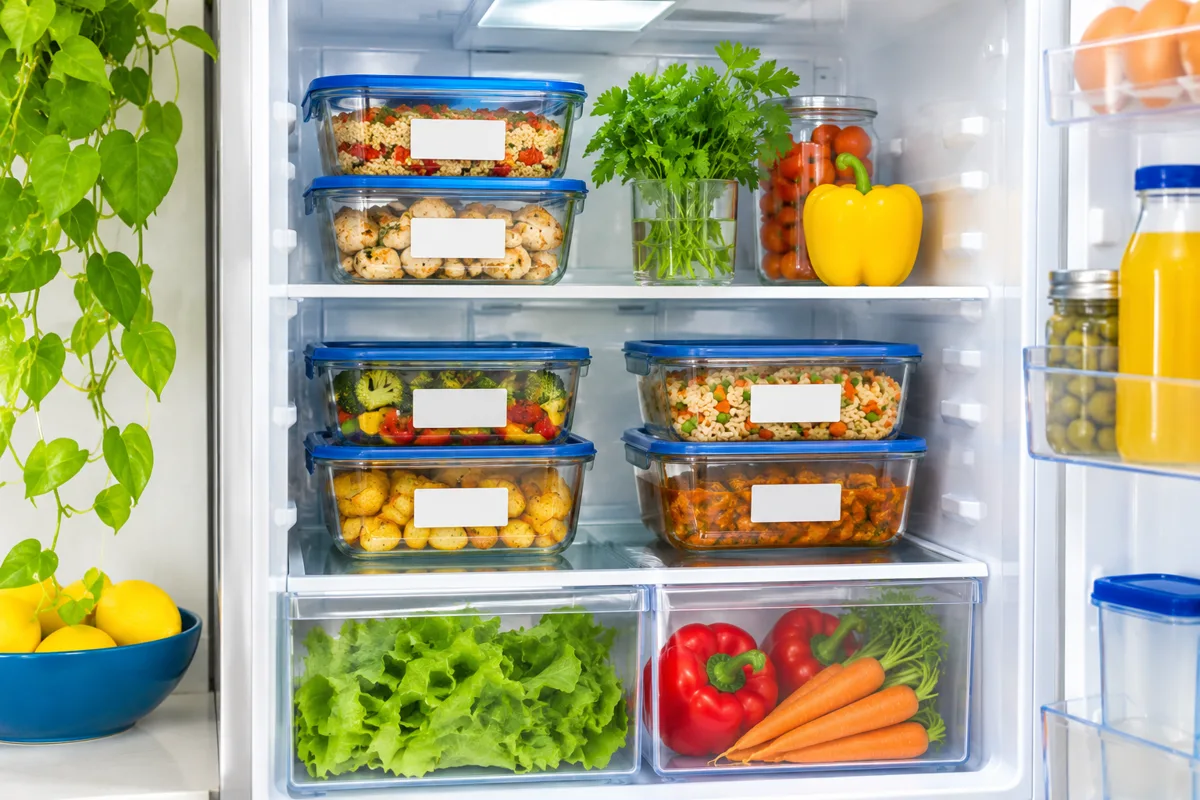
What usually gets better
- Fewer daily decisions: you know what there is for lunch and dinner without having to think about it at nine at night.
- More organized shopping, which may help you spend less, although it depends on your habits and on what you buy.
- Less total time in the kitchen, because you wash the utensils and the countertop only once.
- It is easier to take a packed lunch to work and avoid eating out for lack of time.
What you should keep in mind
- It requires setting aside a fixed block of time, usually at the weekend.
- You need fridge space and some airtight containers.
- Some foods lose their texture if they are prepared many days ahead.
- Your first attempts will probably take longer than expected, which is normal.
To make the cooking session go well, what helps most is having the menu and the shopping list written down somewhere visible, whether on paper on the fridge door or on your phone.
How to plan the weekly menu before cooking
Batch cooking starts with pen and paper, not with pots and pans. Spend about 20 or 30 minutes on Friday or Saturday planning. If you want to go deeper into this part, you will find more ideas in the article on the weekly meal planner.
- Review the week. Check which days you eat out, who is having dinner at home, and whether there are after-school activities or work shifts. There is no point cooking for seven days if you will be away for two of them.
- Decide how many meals you will cover. The usual approach is to prepare Monday to Thursday or Friday, and leave the weekend freer.
- Choose three or four building blocks. For example: a legume, a grain, a protein and a tray of oven-roasted vegetables.
- Write the menu by combining those building blocks. That way the chickpeas can be a stew on Monday and hummus or a salad on Wednesday.
- Check your pantry and fridge. Use what you already have before buying anything new.
- Make the shopping list by section (fruit and vegetables, meat and fish, pantry, dairy). The guide to making a basic shopping list you will actually use will help.
A useful trick is to reserve a "wildcard" day in the menu: a leftovers dinner using whatever is left, such as a Spanish potato omelette, some scrambled eggs or a hearty salad.
If you prefer to have the menu on paper, the app "Canvartin: Planner and Appointments" lets you print an A4 planner (the standard European paper size) from your phone, either blank or with your details already filled in (it is a Premium feature, which can also be unlocked as a reward).
How to organize the cooking session step by step
The key is the order: start with what takes longest and make the most of waiting times.
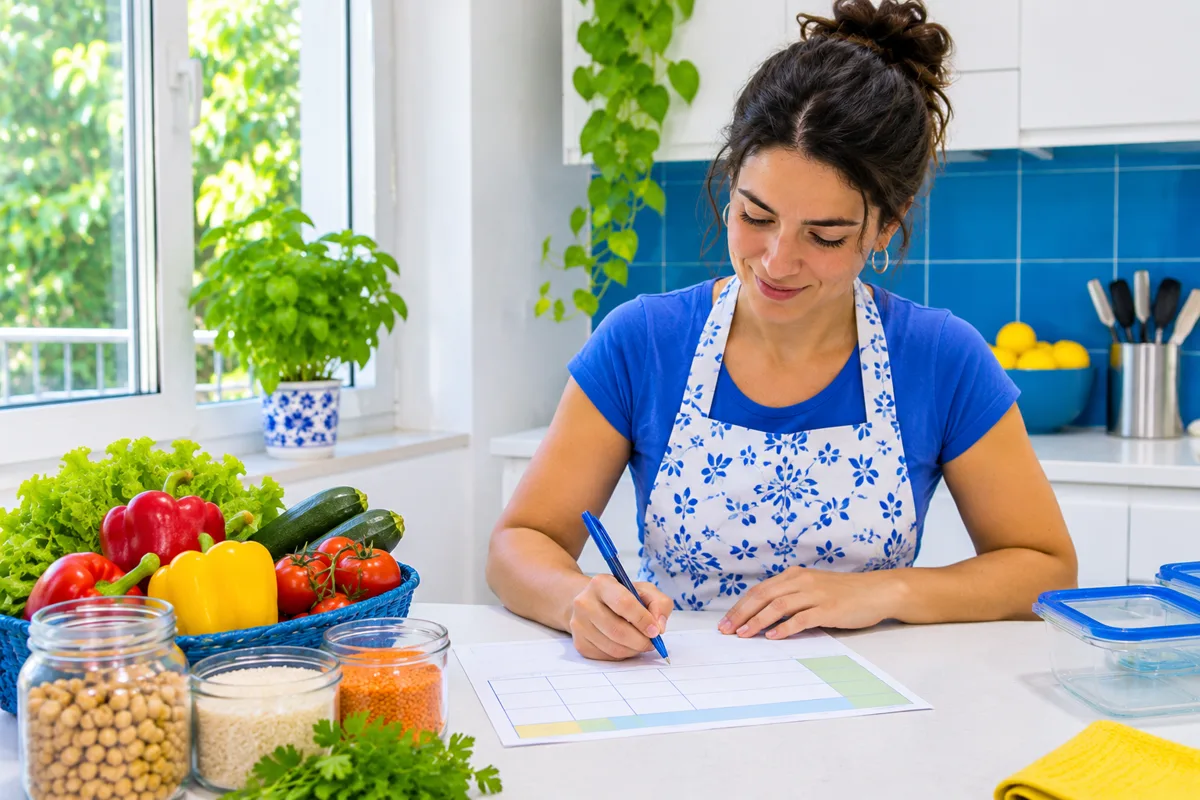
Before you turn on the heat
- Clear the countertop and empty the dishwasher or the drying rack.
- Take out all the ingredients and the containers where you will store the food.
- Soak the legumes the night before if you are going to cook them at home, or use canned cooked legumes to go faster.
Recommended order
- Oven: turn it on first and put in one or two trays of vegetables (pumpkin, peppers, onion, aubergine/eggplant) and, if there is room, chicken thighs or sweet potatoes.
- Long stovetop cooking: put the legumes or a stew that needs time on to cook.
- Short stovetop cooking: meanwhile, cook rice, pasta or eggs and prepare a big batch of tomato and onion base (sofrito) to use in several recipes.
- Cold tasks: wash and chop vegetables for salads, make dressings or a spread.
- Cool and store: let the food cool down for a while, but do not leave it for hours at room temperature, and store it in portions labeled with the day.
Wash up as you go during the downtime: when you finish, the kitchen will be almost tidy. If your kitchen is small, work in rounds and organize the fridge well before you start; here are some ideas for organizing your fridge so food lasts longer.
After an afternoon among the pots and pans, many people feel like winding down with something calm that does not require much thought.
Example of a weekly batch cooking menu with recipes
This example is designed for lunches and dinners from Monday to Thursday, with a cooking session on Sunday. The building blocks are: cooked chickpeas, brown rice, roast chicken, oven-roasted vegetables, tomato sofrito (a slow-cooked tomato and onion base) and a zucchini soup.
| Day | Lunch | Dinner |
|---|---|---|
| Monday | Stewed chickpeas with spinach and sofrito | Zucchini soup and a plain omelette |
| Tuesday | Rice with roast chicken and oven-roasted vegetables | Chickpea salad with tomato, cucumber and tuna |
| Wednesday | Pasta with tomato sofrito and roasted vegetables | Zucchini soup and a hard-boiled egg |
| Thursday | Shredded roast chicken in a warm salad with rice | Leftovers dinner: scrambled eggs with whatever is left |
Some recipes that work especially well for cooking ahead:
- Spoon dishes (hearty stews): lentils, chickpeas or beans often taste even better the next day.
- Vegetable soups and purées: pumpkin, zucchini, leek or carrot. They freeze well in portions.
- Roasted vegetables: they work as a side dish, as a sandwich filling or mixed into pasta.
- Meatballs or chicken in sauce: they keep well and reheat without any problem.
- Base sauces: a homemade sofrito or tomato sauce is very versatile during the week.
In summer, when much of Spain prefers cold food, you can swap stews and hot soups for gazpacho or salmorejo (chilled tomato soups), legume salads, cold pasta or pisto (a Spanish vegetable stew similar to ratatouille), which also keeps for several days.
How long food keeps and how to store it
This is the point where it pays to be most cautious. As a general guide, most cooked dishes are usually eaten within about 3 or 4 days if kept in the fridge at about 4 °C (about 39 °F) or lower, in closed containers. Whatever you plan to eat from Thursday or Friday onwards is better frozen the same Sunday.
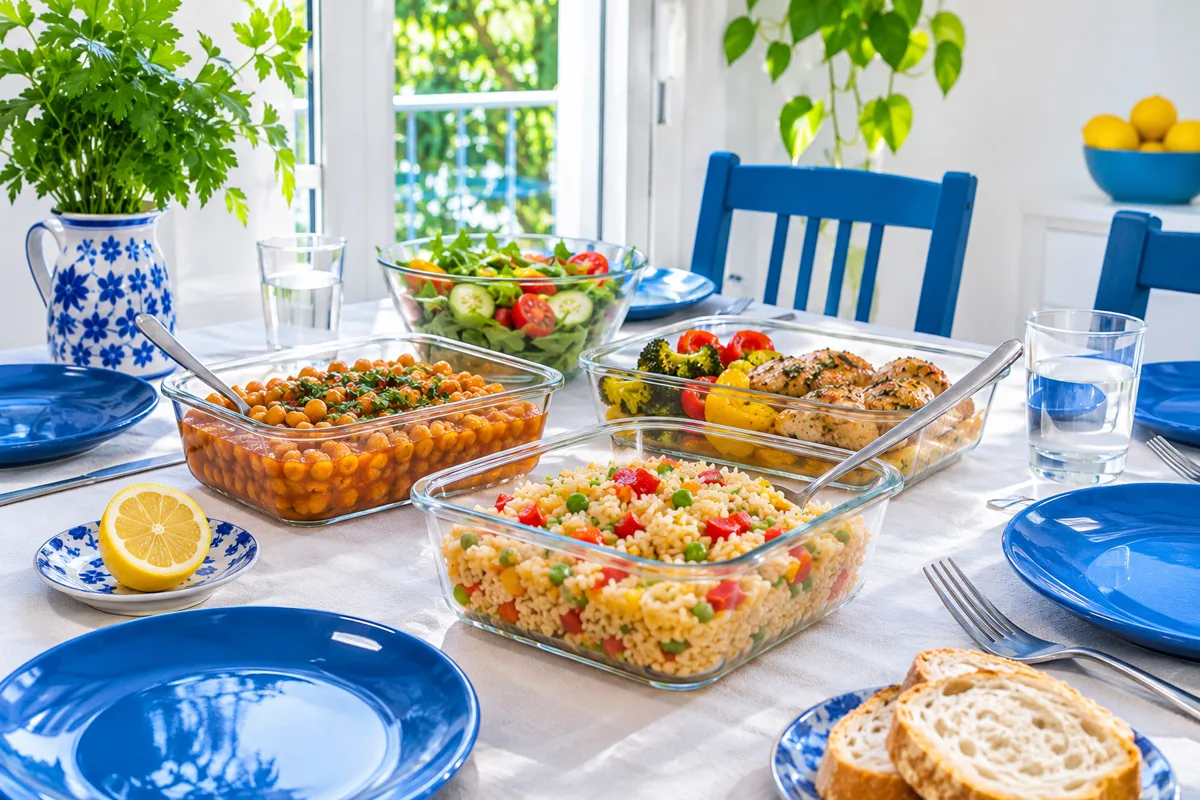
- Cool the food in shallow containers and put it in the fridge as soon as it stops steaming.
- Label each container with its contents and the date.
- Put what needs to be eaten first at the front.
- Thaw in the fridge overnight, not on the countertop.
- Reheat only the portion you are going to eat.
Each food has its own particularities: rice and fish, for example, should be eaten sooner than other things. You can look up specific cases, such as how long cooked lentils last in the fridge. These timeframes are only a guide and depend on how each item was cooked and stored; if in doubt, check the recommendations of the official food safety agency, and if something smells or looks odd, do not eat it.
As for containers, you do not need to spend much. A basic set of glass or food-safe plastic containers can cost approximately 10 to 30 euros at the time of publication, depending on size, material and the shop. Glass ones can go in the microwave and do not absorb smells; plastic ones are lighter to carry to work.
Common mistakes when starting batch cooking
- Trying to cook too much the first time. Start with three or four preparations and expand once you get the hang of it.
- Choosing recipes you do not like. If nobody at home likes quinoa, do not include it just because it is practical.
- Repeating the same dish four days in a row. Mix-and-match building blocks and different sauces are better.
- Leaving no margin. An unexpected day is normal; always keep a little reserve in the freezer.
- Shopping without checking the pantry. You end up with duplicate items that expire. If this point interests you, also see how to save on supermarket shopping in Spain.
- Cooking too much and not freezing in time. Decide the same Sunday what goes in the fridge and what goes in the freezer.
After a few weeks of practice, most people find their own rhythm: some prefer one long session on Sunday and others split the work into two shorter ones, Sunday and Wednesday. Both options work.
Frequently asked questions
What is weekly batch cooking in a nutshell?
It means cooking a good part of the week's food in a single session, usually at the weekend, so that each day you only need to reheat or combine dishes.
How long does batch cooking take?
As a guide, between two and three hours to cover lunches and dinners for four or five days. The first few times it may take a little longer.
How many days can you cook for?
For the fridge, the usual approach is to plan for about 3 or 4 days. Whatever you will eat after that is best frozen the same day you cook it.
Which recipes are best to start with?
Legume stews, vegetable soups, oven-roasted vegetables, cooked rice or pasta and a homemade tomato sauce. They are simple and combine well with each other.
Do you save money with batch cooking?
It can help, because you shop with a fixed list and waste less, but the result depends on your habits, on what you buy and on prices in your area.
Do you need a big freezer?
Not necessarily. If you only cook for the fridge from Monday to Wednesday, a bit of free space and some containers that stack well are enough.