
Yes, you can freeze cheese, but not all cheeses come out the same afterwards. Mature, semi-mature and grated cheeses, and the ones you plan to cook with, usually hold up quite well. Fresh, very creamy or high-moisture cheeses, on the other hand, can change texture and turn grainier or wetter.
The key is to freeze it in small portions, well wrapped and labelled with the date. That way you avoid wasting food, you can take advantage of special offers, and you have cheese ready to melt over a bake, add to an omelette, make a sauce or round off a quick dinner.
In Spain, where it is normal to buy wedges, blocks, slices or grated cheese to last several meals, freezing can be useful if you will not finish it before it goes off. Even so, it is worth doing it in an organised way and knowing what type of cheese you have in front of you.
You can freeze cheese, but it depends on the type
The question is not only whether you can freeze cheese, but what you want to use it for afterwards. Cold preserves food, but it can alter its texture. When cheese freezes, the water it contains forms ice crystals. When it thaws, those crystals can break down part of the structure and leave the cheese more crumbly, dry or grainy.
That is why a cheese you are going to melt, grate or cook with usually gives good results. If you want to serve it on a cheeseboard, thinly sliced and with a good texture, you may notice the change more.
As a practical rule:
- Best for freezing: mature and semi-mature cheeses, grated cheese, blocks or slices for cooking.
- Acceptable with caveats: mozzarella, goat's cheese logs, blue cheeses and some creamy cheeses if they are going into hot recipes.
- Worst results: Burgos-style fresh cheese, cottage cheese, ricotta, whipped fresh cheese and very spreadable cheeses.
If you are unsure, freeze a small portion as a test. That way you can see how your particular cheese turns out before putting a large piece in the freezer.
Which cheeses can be frozen and which are best avoided
This table works as a quick guide for deciding. The times are approximate as of the publication date and may vary depending on your freezer, the packaging and the condition of the cheese before freezing. For packaged foods, also check the manufacturer's label.
| Type of cheese | Can it be frozen? | Best way to freeze it | Recommended use afterwards |
|---|---|---|---|
| Mature or aged cheese | Yes | In small wedges or grated | Gratins, sauces, pasta, croquettes |
| Semi-mature cheese | Yes | In blocks, slices or grated | Hot sandwiches, omelettes, oven dishes |
| Young, soft cheese | Yes, with caveats | Small, well-wrapped portions | Melting or cooking |
| Grated cheese | Yes | In flat bags, pressing the air out | Pizza, pasta, gratins |
| Sliced cheese | Yes | Separating the slices with food-safe paper | Hot sandwiches, homemade burgers |
| Mozzarella | Yes, best drained | Drained and in pieces | Pizza, lasagne, oven dishes |
| Fresh cheese | Not ideal | Only if you accept a change in texture | Cooked recipes, not for eating as it is |
| Cream cheese or spreadable cheese | Not suitable for spreading | It can separate and turn grainy | Cooked sauces or fillings |
If you organise your shopping around set menus, freezing grated cheese or leftover wedges can fit very well into a weekly plan. It may also help to look at ideas on how to save money on food in Spain without buying more than you will actually use.
How to freeze cheese step by step
For cheese to keep its flavour better and not pick up smells from the freezer, the most important thing is to protect it from the air. You do not need to overcomplicate it, but it is worth following a method.
- Check that the cheese is in good condition. Freeze cheese that is fresh, with no strange smells, no unexpected mould and well within a reasonable date for eating.
- Decide on the format. You can freeze it in small wedges, blocks, slices or grated. Think about how you will use it afterwards.
- Divide it into portions. Portions of approximately 50 to 200 g are best, depending on your household. That way you only thaw what you need.
- Wrap it well. Use food-safe cling film, baking paper or freezer bags. If you can, double up the protection.
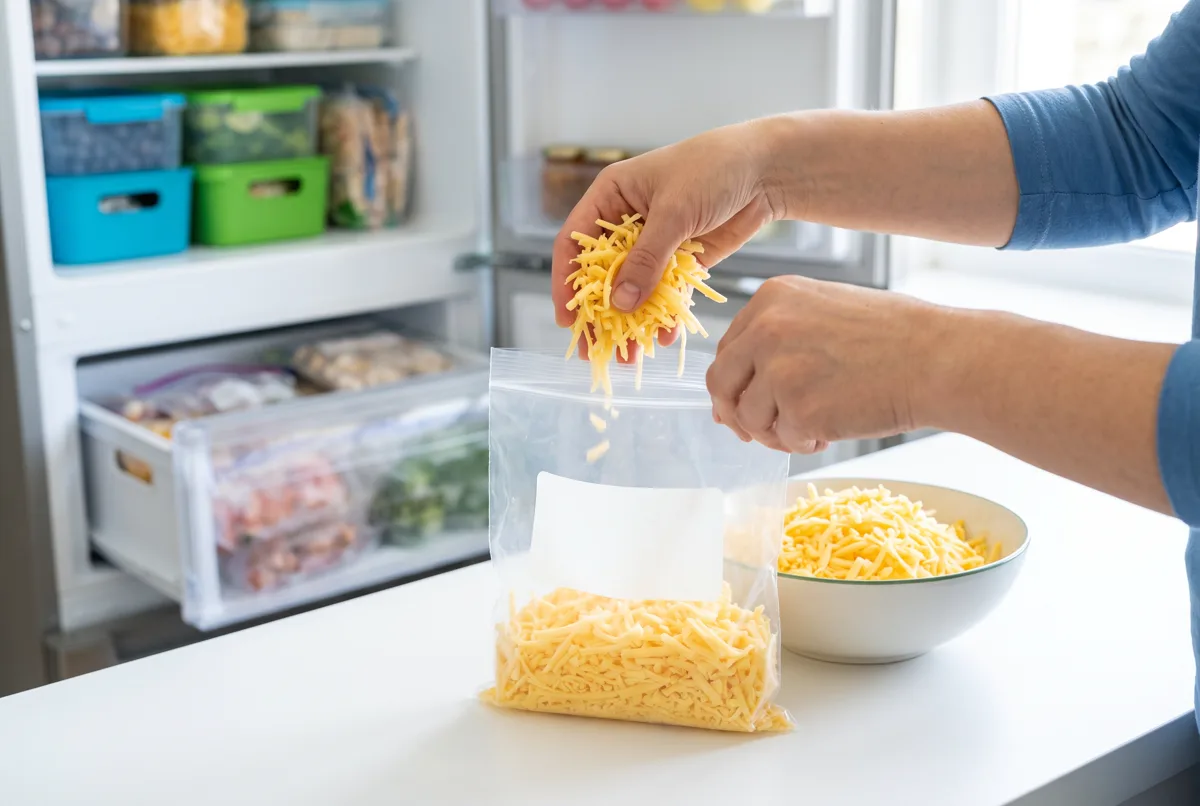
- Press out the air. The less air left in, the less it will dry out. With bags, flatten them before sealing.
- Label it. Write down the type of cheese and the freezing date.
- Freeze it as soon as possible. Do not leave the cheese out at room temperature for many hours before putting it in the freezer.
The usual recommended temperature for a home freezer is around -18 degrees Celsius (about 0 °F). Check your appliance's manual and, if you have doubts about food storage, consult official food safety sources in Spain or the manufacturer's information.
A small list on the fridge door can stop cheese from being forgotten for months.
How to freeze grated, sliced, mature and fresh cheese
Not all formats are prepared the same way. Here are specific instructions for the most common cases in a home kitchen.

Grated cheese
Grated cheese is one of the easiest to freeze, especially if you use it on pasta, homemade pizza, lasagne, vegetable gratins or omelettes. Spread it in a freezer bag in a flat layer. It freezes faster that way, and you can break off a portion without thawing the whole lot.
- If you grate it at home, make sure it is cold so it does not clump.
- You can add it straight from frozen to hot dishes.
- If the bag ends up very full, divide it into several portions.
Sliced cheese
Sliced cheese can be frozen, but if you put the whole pack in as it is, the slices may stick together afterwards. To avoid this, separate the slices with small pieces of food-safe paper and keep them in a sealed bag.
It works best if you are going to use it for hot sandwiches, oven-baked baguettes or recipes where it melts. If you eat it cold, it may lose some of its original texture.
Mature and semi-mature cheese
Mature and semi-mature cheeses usually hold up well because they contain less water than a fresh cheese. Even so, after freezing they may crumble more when you cut them. That is why it is practical to freeze them already grated or in small pieces.
If you have a large wedge, do not freeze it whole unless you will use all of it later. It is better to divide it into portions for several recipes.
Fresh cheese and creamy cheeses
Fresh cheese has a lot of moisture, so when you thaw it, it can release water and turn more gritty. You can freeze it if you want to avoid throwing it away, but it is not the best option if you want to eat it as it is, with honey, quince paste or in a salad.
Something similar happens with cream cheese, whipped fresh cheese and spreads: they can separate. If you have already frozen them, try stirring them well and use them in a sauce, a savoury cream, a baked filling or a cooked recipe.
How long frozen cheese lasts
As a general guide, frozen cheese is usually at its best if eaten within 2 to 3 months. Some mature cheeses can last a little longer, but the more time passes, the more likely they are to lose aroma, dry out or take on a freezer taste.
These times are approximate and depend on your freezer, whether it holds its temperature well, the packaging and the condition of the cheese before freezing. As of the publication date, a reasonable household reference would be:
- Grated cheese: around 2 to 3 months.
- Mature or semi-mature cheese: around 3 months, better if well wrapped.
- Sliced cheese: around 1 to 2 months for the best texture.
- Drained mozzarella: around 2 months.
- Fresh cheese: around 1 month, knowing that the texture will change.
To stay organised, you can note down what goes into the freezer just as you do with other staples. If you often prepare meals in advance, it will be useful to combine this with a weekly meal planner or a paper freezer list. The Canvartin: Planner and Appointments app lets you create tasks and reminders, and also print A4 planners from your phone if you want to keep track of what you have in the kitchen.
A calm kitchen often starts with knowing what you have stored and what needs to be used first.
How to thaw cheese properly
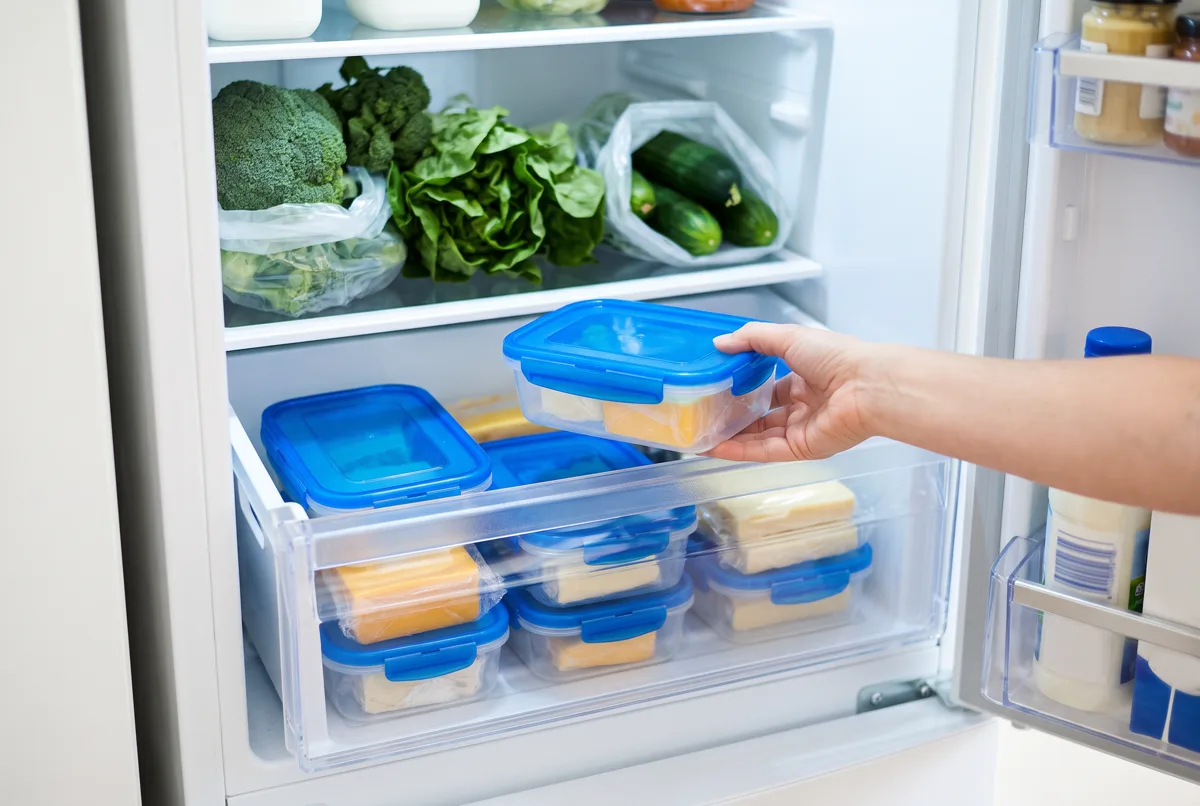
The best way to thaw cheese is to move it from the freezer to the fridge and leave it there for several hours. For a small portion, overnight may be enough. A larger wedge may need more time. Avoid thawing it on the worktop for hours, especially in summer or in warm kitchens.
Recommended steps:
- Take out only the amount you need. Do not thaw a large bag if you are only going to use two spoonfuls.
- Leave it in the fridge. Put it on a plate or in a container in case it releases some liquid.
- Use it soon. Once thawed, use it within the next few days, depending on the type of cheese and how it looks.
- Do not refreeze it without cooking it. As a prudent household rule, avoid refreezing thawed cheese as it is.
Grated cheese, if it is going into a hot recipe, can be used straight from frozen. For example, on freshly cooked pasta, a homemade pizza, oven-roasted vegetables or a gratin. If you are going to put it in a salad or on a cheeseboard, it is better to thaw it in the fridge and accept that the texture may not be the same.
If you are looking at how to store other foods better, you might also be interested in how to organise your fridge so food lasts longer and what temperature the fridge and freezer should be at.
Common mistakes when freezing cheese
Freezing cheese is simple, but there are small slip-ups that make the result worse. These are the most common:
- Freezing pieces that are too large. They are hard to thaw later and you end up using more than you need.
- Not protecting it well. Cheese absorbs smells easily. If it is poorly sealed, it can taste of the freezer.
- Freezing cheese that is already dry. If the wedge has been open for days and has dried out, the freezer will not improve it.
- Not writing the date. Without a date, it is easy to forget when you put it in.
- Expecting it to be the same for a cheeseboard. It works well for cooking, but served cold it can disappoint.
- Putting hot cheese in the freezer. If it is part of a recipe, let it cool before freezing.
It is also worth checking the freezer drawer from time to time. You can use the day you plan your shopping to look at leftover cheese, bread, vegetables or cooked portions. If you shop with a list, you will save space and avoid duplicates. Here is a practical guide to making a basic shopping list that you will actually use.
Ideas for using thawed cheese
Thawed cheese usually performs best in hot dishes. If it has turned a little crumbly, grainy or less attractive when cut, it does not matter: in many recipes you will barely notice.
- Gratins: pasta, aubergines (eggplants), courgettes (zucchini), cauliflower or baked potatoes.
- Omelettes and scrambled eggs: add small cubes of semi-mature or soft cheese.
- Sauces: melt grated cheese with a little milk or cooking cream, adjusting the texture bit by bit.
- Croquettes or fillings: mix leftover cheese with chicken, spinach, ham or mushrooms.
- Homemade pizzas: use drained mozzarella or a mix of grated cheeses.
- Hot sandwiches: frozen slices work better melted than cold.
If you are organising several meals for the week, you can prepare a base recipe and add thawed cheese at the end. For example, a tray of roasted vegetables with grated cheese on top or a pasta with a simple sauce. To organise this kind of preparation better, you can read about weekly batch cooking.
Frequently asked questions
Can you freeze mature cheese?
Yes, you can freeze mature cheese. It is best to do it in small wedges or grated. When thawed it may be a little more crumbly, so it works better for cooking or gratins.
Can you freeze fresh cheese?
You can, but it is not the most recommended option if you want to eat it as it is. Because it contains a lot of water, it can release liquid and turn grainy. It is better to use it afterwards in cooked recipes.
Can you freeze store-bought grated cheese?
Yes, you can normally freeze grated cheese, as long as it is in good condition and well sealed. Check the label on the packaging and use it within a reasonable time, approximately 2 to 3 months.
How do you stop grated cheese clumping when you freeze it?
Freeze it in a flat bag, press out the air and do not make a very thick block. If you grate it at home, chill the cheese first and split it into small portions.
Can you refreeze thawed cheese?
As a prudent household rule, it is better not to refreeze thawed cheese without cooking it. If you have used it in a cooked recipe and it was handled correctly, consider the case carefully and eat it soon.
Is frozen cheese good for a cheeseboard?
It can work, but it is not where it looks and tastes best. For a cheeseboard, especially if you have guests, it is usually better to use cheese that has not been frozen. Keep the frozen cheese for hot dishes.