
If you are wondering how to save water without giving up comfort, the short answer is this: take shorter showers with an efficient showerhead, run the washing machine and dishwasher only with a full load, check your toilet cistern and watch out for leaks. These four habits cut a good part of your household water use and, along the way, your electricity or gas bill too, because hot water costs money as well.
In Spain, water is a resource that is becoming scarcer more and more often: summers are long, droughts keep coming back, and in some areas town councils go as far as restricting watering or filling swimming pools. On top of that, water bills have been creeping up, and in many municipalities you are charged in bands, so the more you use, the more each cubic metre costs.
In this guide you will find tips organised by area of the house, a table with approximate consumption figures, how to detect a leak using your water meter and how to work out what you can save in a year. All of it is designed so you can start applying it this very week.
Where the water goes at home: approximate consumption
Before changing habits, it helps to know what uses the most. The bathroom takes the biggest share, followed by the kitchen and the laundry. These figures are approximate and depend on how old your taps and appliances are, but they give you a good idea.
| Use | Typical consumption | With efficient habits |
|---|---|---|
| 10-minute shower | 100-120 litres | 35-45 litres (5 minutes and an efficient showerhead) |
| Bath in the tub | 150-200 litres | Replace it with a short shower |
| Flush of an old cistern | 9-12 litres | 3-6 litres with a dual-flush button |
| Brushing your teeth with the tap running | 10-15 litres | 1 litre using a glass |
| Washing dishes by hand with the tap running | 50-100 litres | 9-12 litres in a full dishwasher on the eco programme |
| Washing machine | 50-70 litres | The same, but with a full load and fewer washes |
If you want to fine-tune the calculation of how much you use in the shower, this article on how much water a shower uses has examples based on the showerhead and the length of the shower.
How to save water in the bathroom
This is the area where any change shows up the most, because it is used several times a day by everyone in the house.
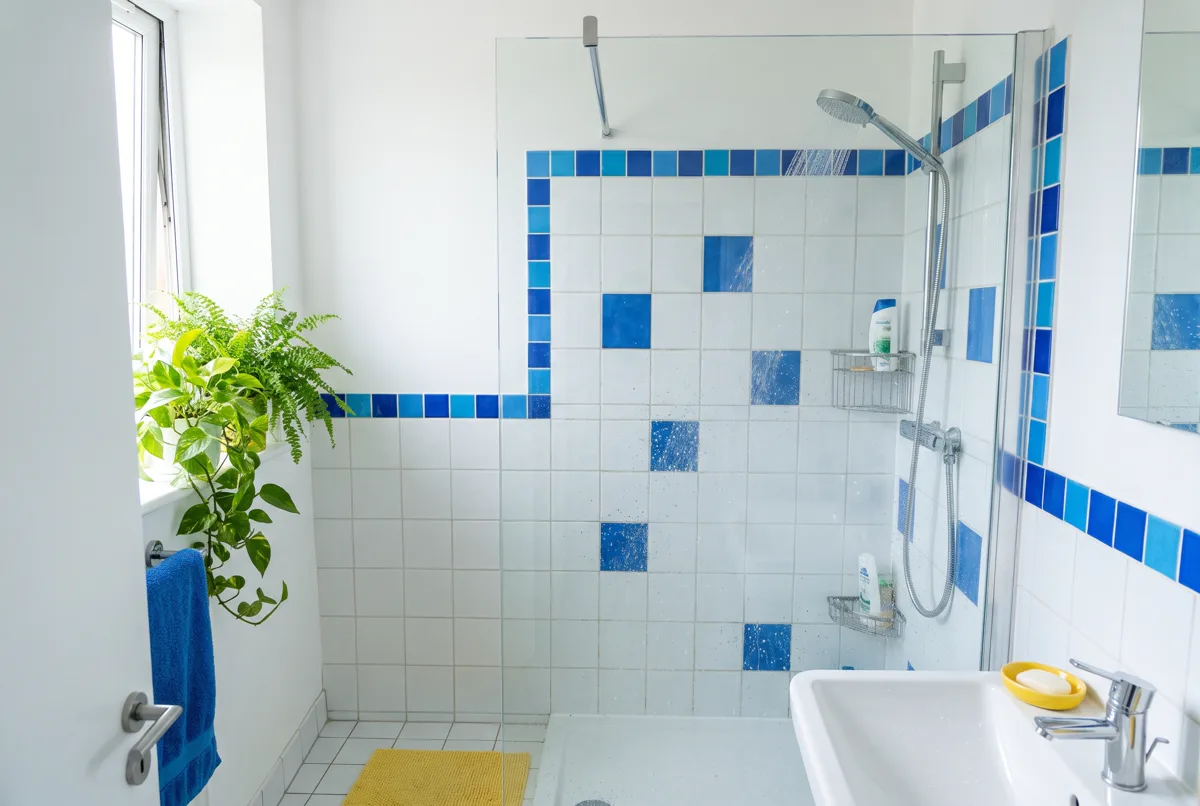
The shower
- Swap your showerhead for a low-flow or aerating one. They cost approximately 10 to 30 euros and mix air with the water, so the feeling of pressure stays the same.
- Turn off the tap while you soap up or shampoo your hair.
- Set a five-minute timer or play a song of that length. It works very well with children and teenagers.
- Collect the cold water that runs while you wait for it to heat up in a bucket or a jug. You can use it for watering plants or mopping the floor.
- If you have an electric water heater or a boiler, check the temperature: with less hot water you use less energy and spend less time adjusting the tap.
The toilet
- If your cistern is old and has a single flush, you can fit a dual-flush mechanism. It costs approximately 15-30 euros at hardware shops.
- Another cheap option is to put a one-and-a-half-litre bottle full of water inside the tank, away from the mechanism: each flush will use that much less water.
- Do not use the toilet as a bin. Cotton buds, wipes or hair make you flush unnecessarily and also block the pipes.
The bathroom sink
- Fit aerators on your taps. They are small parts that screw onto the spout and cost just a few euros.
- Use a glass to brush your teeth and turn off the tap when you shave or take off your make-up.
- Single-lever mixer taps that open on cold in the central position stop you from accidentally firing up the boiler every time you turn on the tap.
Water in the kitchen: washing up, cooking and drinking
In the kitchen, consumption shoots up mostly when washing up. Here are the changes that make the biggest difference:
- Use the dishwasher full and on the eco programme. A modern dishwasher uses less water than washing by hand with the tap running. There is no need to rinse the plates beforehand: just scrape off the leftovers with a spatula or a used napkin.
- If you wash by hand, use two basins or plug the sink: one with soapy water and another for rinsing. That way you avoid leaving the tap running the whole time.
- Wash fruit and vegetables in a bowl, not under the running tap. That water can then go on your plants.
- Cook with just the right amount of water and with a lid on. For vegetables, steaming uses less water and keeps the flavour better.
- Defrost in the fridge the night before instead of putting the food under the tap.
- Keep a jug of water in the fridge so you do not have to let the tap run waiting for it to come out cold in summer.
If the tap water in your area tastes bad but is safe to drink, a filter jug usually works out cheaper than buying bottles every week, and you cut down on plastic.
To see the effect of these changes, it really helps to write down your meter readings and the amount of each bill alongside the rest of your household expenses, for example in a paper financial planner like the ones from Canvartin, handmade in Spain.
The washing machine and laundry
You cannot eliminate the washing machine, but you can use it better. The water it uses per cycle is fairly fixed, so the key is to wash less often and with a full load.
- Fill the drum without cramming the clothes in: you should be able to fit a hand on top.
- Use the eco programme or a low-temperature one. It takes longer, but it uses less water and energy.
- Avoid the prewash unless the clothes are very dirty. For specific stains, it is better to treat them by hand first.
- Do not wash out of habit clothes that have only been worn for a short while: a pair of jeans or a jumper can handle several wears if you air them out.
- If you are going to replace your washing machine, look at the energy label, which also shows the water consumption per cycle.
In Spain, many energy retailers offer tariffs with cheaper hours for electricity, so running the washing machine during those hours saves on your electricity bill even though the water use does not change. You will find the details in the article on how much electricity a washing machine uses per wash.
Leaks and drips: how to detect them with your meter
A dripping tap or a leaking cistern can waste dozens of litres a day without you noticing. It is the first thing to check when your bill goes up for no apparent reason.
The meter test
- Find your water meter. In flats it is usually in a cupboard on the landing, in the building entrance hall or in a shared utility room; in houses, it is in an access chamber next to the front wall.
- Turn off all taps and make sure no appliances are running.
- Write down the reading or take a photo.
- Wait one or two hours without using any water, for example before going to bed.
- Check again. If the figure has changed or the small dial is turning, there is a leak somewhere.
The cistern test
Put a few drops of food colouring in the cistern tank and do not flush for a while. If the colour shows up in the bowl, the mechanism is leaking and you need to replace the rubber seal or the valve, which is a simple and cheap repair.
If the leak is in a pipe built into the wall, call a plumber. Also check your home insurance: many policies cover leak detection and water damage.
Saving at home does not have to be a burden: some people even enjoy the small chores, and if you feel like switching off for a while with something equally calm, in “Canvartin: Home Simulator” you can wash dishes or look after plants with relaxing sounds without wasting a single drop.
Plants, terrace and summer
In summer, consumption rises because of the heat and the watering. With the climate across much of Spain, watering badly is throwing water away: it evaporates before it reaches the roots.
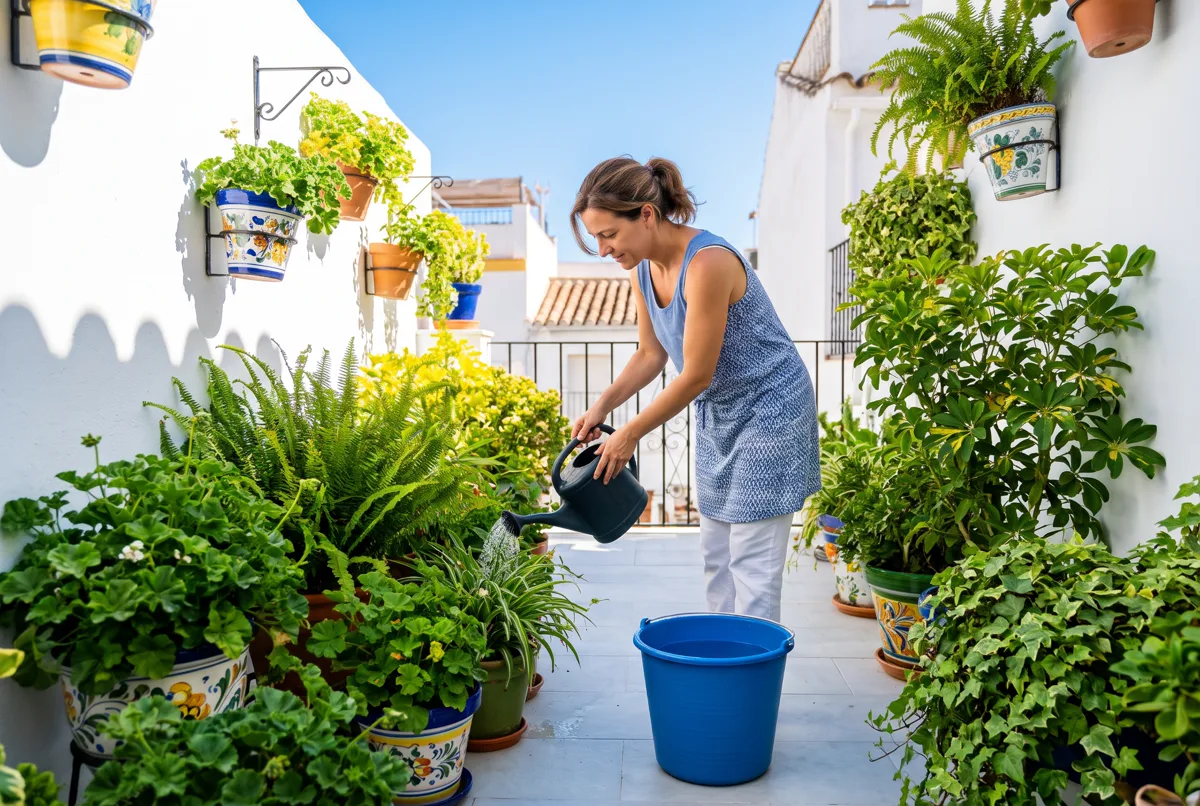
- Water first thing in the morning or at dusk, never at midday.
- Choose Mediterranean plants that cope well with drought: rosemary, lavender, thyme, geraniums or succulents.
- Put saucers under your pots and a layer of bark or gravel on top of the soil to help it hold moisture.
- Reuse the water from boiling vegetables, once it is cold and unsalted, or the water you collect in the shower.
- A drip irrigation system with a timer costs approximately 30 to 80 euros for a terrace and delivers just the right amount of water.
- Clean the terrace with a bucket and mop, not with a hose.
Bear in mind that during droughts some town councils and regional governments (autonomous communities) ban watering gardens or filling swimming pools at certain times. Check the notices issued by your municipality, because breaking the rules can lead to fines.
How much you can save on your water bill in Spain
In Spain, the water bill is issued by the company that runs the service in your municipality and usually arrives every two or three months. It normally includes:
- A fixed or service charge, which you pay even if you use no water.
- Consumption in bands: the first cubic metres are cheaper and the following ones are more expensive.
- Sewerage and water treatment, sometimes as a regional levy.
- In some municipalities, the waste collection charge is on the same bill.
Adding it all up, a cubic metre (1,000 litres) costs approximately between 1.5 and 3 euros depending on the city. A rough example: if a family cuts 60 litres a day by changing the showerhead and shortening showers, it saves about 22 cubic metres a year, which is approximately 35 to 65 euros on water alone. On top of that comes what you no longer spend on heating it, which can be quite a lot more. To trim that part too, see how to save on your electricity bill.
A few tips for keeping an eye on spending:
- Check whether you are in the right band for the number of people living in your home. Many municipalities widen the bands for large families if you apply.
- Ask your town council about discounts or a social tariff if you have a low income.
- Set up a direct debit for the bill and record its amount as a fixed expense. If you are not sure how to categorise it, here is a guide to fixed and variable household expenses.
- Compare bills for the same period of the previous year: that way you can see whether your changes are working without summer fooling you.
If you want to fit this expense into the bigger picture of your finances, you can follow the example of this monthly household budget.
Frequently asked questions
What uses the most water in a home?
The shower and the toilet, in that order in most households. That is why changes in the bathroom are the ones that show up most on your bill.
Does a dishwasher use less water than washing by hand?
A modern dishwasher, full and on the eco programme, usually uses less water than washing up with the tap running. If you wash by hand using basins, the difference shrinks a lot.
How often does the water bill arrive in Spain?
It depends on the municipality: every two or three months is the norm. In some places it is monthly.
How do I know if I have a water leak?
Turn off all the taps, write down the meter reading and check again after one or two hours. If it has changed, there is a leak.
Is it worth changing the showerhead?
Yes, it is one of the cheapest changes with the biggest effect. For approximately 10-30 euros you reduce the flow while barely noticing any difference in pressure.
Can I reuse water from the shower or from cooking?
The cold water that runs while you wait for it to heat up can be used for watering or cleaning. Water from boiling vegetables, once cold and unsalted, is also fine for plants.