
If you are wondering how much electricity a washing machine uses per wash, the short answer is this: a modern washing machine typically uses approximately 0.3 to 1.5 kWh per wash, depending on the temperature and the programme. In euros, at typical electricity prices in Spain at the time of publication, that comes to approximately 5 to 35 cents per wash. A cold wash sits at the low end of the range, and a 90 °C wash can exceed it.
These figures are indicative: they change with your tariff, the time of day you run the machine, the age of the appliance and how full you load it. That is why you will find not only ranges here, but also the steps to work out what it costs you personally, with your bill in hand.
You will see what makes a washing machine use more power, how to read the energy label, how much it can add up to per month, and which habits help you use less without making life complicated.
How much electricity a washing machine uses per wash by temperature
Most of the energy a washing machine uses goes into heating the water. The motor, the drum and the spin cycle use much less. That is why temperature is the thing that changes consumption the most from one wash to another.
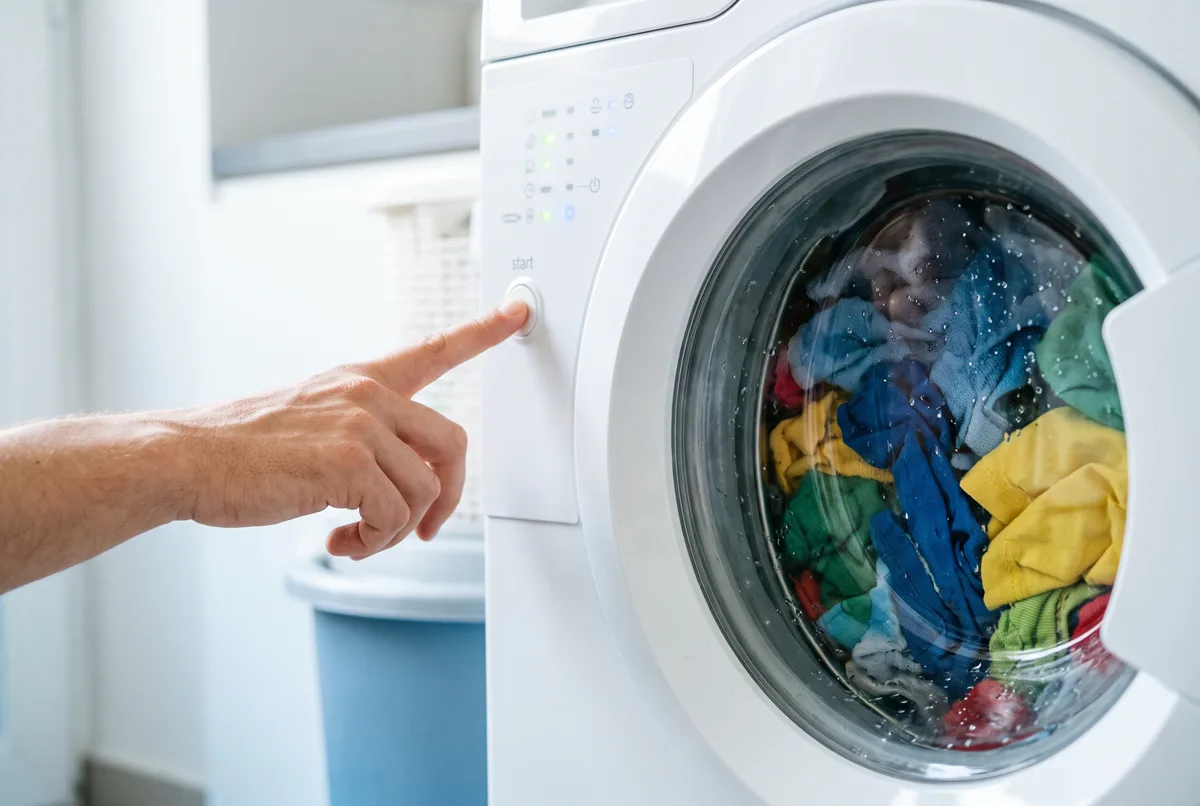
This table shows approximate figures for a front-loading washing machine of about 7 to 9 kg in good condition. The cost is calculated with an indicative price of between €0.12 and €0.25 per kWh, which can vary with the tariff and the time of day:
| Programme | Approximate consumption per wash | Approximate cost per wash |
|---|---|---|
| Cold or 20 °C | 0.2 - 0.4 kWh | €0.03 - €0.10 |
| 30 °C | 0.3 - 0.6 kWh | €0.04 - €0.15 |
| 40 °C | 0.5 - 0.9 kWh | €0.06 - €0.23 |
| Eco 40-60 | 0.5 - 0.9 kWh | €0.06 - €0.23 |
| 60 °C | 0.9 - 1.5 kWh | €0.11 - €0.38 |
| 90 °C | 1.6 - 2.5 kWh | €0.19 - €0.63 |
Note that the eco programme usually lasts longer than a normal 40 °C wash and still uses a similar amount of energy or less: it heats the water more slowly and extends the soak, which saves energy. Taking longer does not mean using more.
What makes a washing machine use more or less
Two identical washing machines can use different amounts depending on how they are used. These are the factors that matter most.
Water temperature
This is the main factor. Going from 60 °C to 30 °C can cut the consumption of a wash to roughly half or less. For everyday, lightly soiled clothes, 30 °C or 40 °C is usually enough with today's detergents.
The load
A half-empty washing machine uses almost the same as a full one. That is why it pays to wait until you have a full load, without cramming the clothes in: ideally, about a hand's width of space should remain at the top of the drum.
The programme and the spin
Long cotton programmes at high temperatures use the most. Quick programmes save time, but not always energy if they heat the water all at once. The spin cycle uses little by comparison, and well-spun clothes dry sooner too.
Age and maintenance
A washing machine that is many years old, or whose heating element is caked in limescale, takes longer to heat and can use more. Cleaning the filter and the detergent drawer from time to time and running an occasional maintenance wash helps it work better.
How to work out what each wash costs in your home
You do not need any special devices. With your electricity bill and the information on your washing machine, you can make a fairly reasonable estimate.
- Find the programme's consumption. Look at the manual or the energy label. The manual usually gives the kWh for each programme; the label gives the consumption of the eco 40-60 programme.
- Check the price per kWh on your bill. Look for the section on energy consumed. If you have different prices by time of day, note the one for the time band when you usually wash.
- Multiply. The wash's consumption in kWh times the price per kWh. That is the approximate energy cost of that wash.
- Add the water if you want to be more precise. A modern washing machine uses approximately 40 to 60 litres per wash. The price of water varies a lot by municipality in Spain, so check your water bill.
Example: a 40 °C wash that uses 0.6 kWh, at a price of €0.18/kWh, costs approximately 0.6 x 0.18 = €0.11 in electricity. If you run it in cheaper hours and the kWh drops to €0.12, it would be about €0.07. The difference per wash is small, but it adds up over the year.
If you want to see how the washing machine fits into the total of your bill, it helps to know how many kWh a home uses per month in Spain.
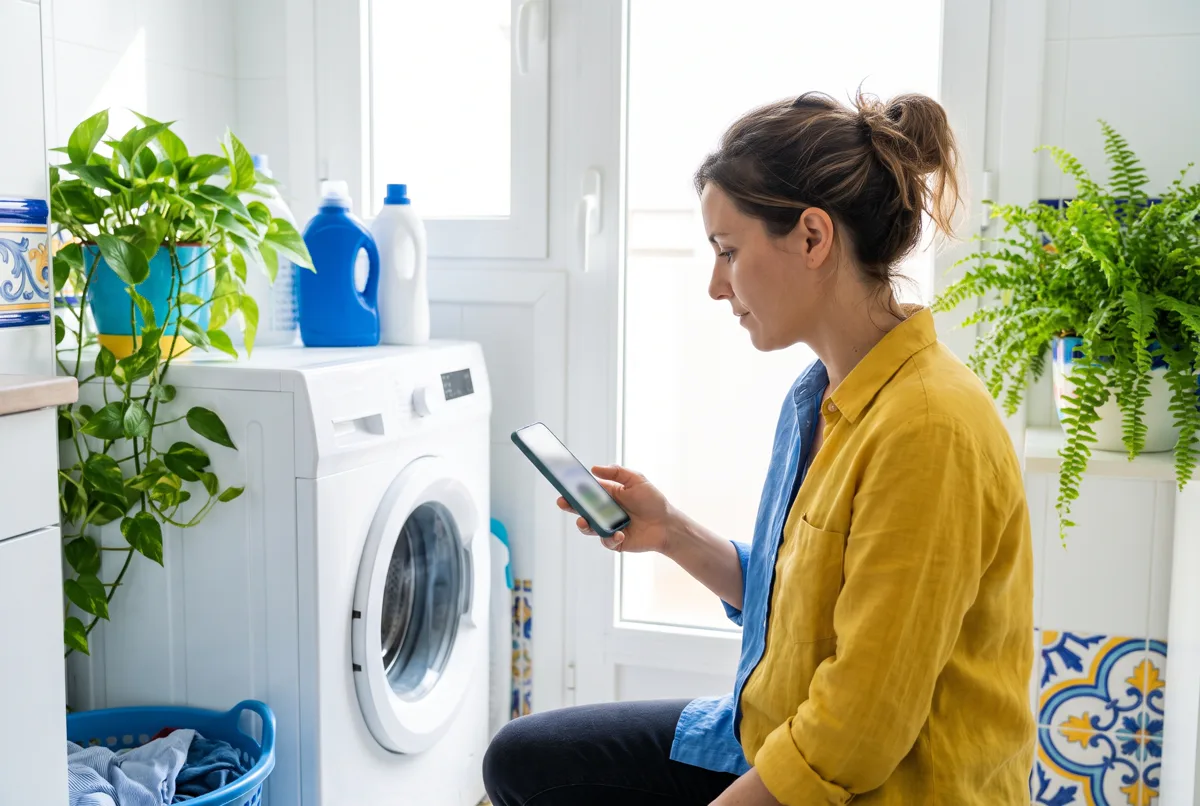
Jotting down these small costs for a few weeks is the simplest way to know how much you spend on electricity; in the app "Canvartin: Planner and Appointments" you can note them alongside your household expenses and set a reminder to wash in the time band that suits you.
How much a washing machine uses per month and per year
Monthly cost depends mostly on how many loads you run. Some indicative examples with an average consumption of about 0.7 kWh per wash:
- One person, 2 washes a week: about 6 kWh a month, approximately €0.70 to €1.50.
- Couple, 4 washes a week: about 12 kWh a month, approximately €1.50 to €3.
- Family with children, 7 or 8 washes a week: about 22 kWh a month, approximately €2.70 to €5.50.
If you usually wash at 60 °C or higher, these amounts can double. Over a year, for a family, the difference between washing almost everything hot and washing almost everything at 30-40 °C can show up on the bill, although the exact figure depends on your situation.
Sheets and towels are usually the heaviest and hottest washes. If you are unsure how often to do them, here is a guide on how often to wash sheets and towels.
How to read the washing machine's energy label
In Spain, as in the rest of the European Union, new washing machines carry an energy label with letters from A to G. Since the 2021 update, the scale is stricter, so a washing machine that used to be A+++ can now show up as B, C or D without anything having changed.
The most useful parts of the label are:
- Consumption in kWh per 100 cycles of the eco 40-60 programme. If it says 55 kWh, each wash on that programme uses about 0.55 kWh.
- Litres of water per cycle on that same programme.
- Capacity in kg and the duration of the eco programme.
- Spin class and noise level, useful if you live in a flat with thin walls.
If you are thinking of replacing your washing machine, always compare the kWh per 100 cycles between models of similar capacity. For details of the regulations, check the official energy labelling information or ask at the shop.
Putting the washing on and waiting for it to finish can also be a little break; if you fancy something calm for those minutes, the game "Canvartin: Home Simulator" offers simple household tasks with relaxing sounds, with no rush.
When to run the washing machine in Spain to pay less
If you have a tariff with prices by time band, the time of day does matter. On the usual household tariff in Spain, in general terms, the day is divided into three periods on the Spanish mainland:
- Off-peak (cheapest): from midnight to 8 am, and all day on weekends and national public holidays.
- Mid-peak (intermediate): from 8 to 10 am, from 2 to 6 pm and from 10 pm to midnight on weekdays.
- Peak (most expensive): from 10 am to 2 pm and from 6 to 10 pm on weekdays.
In the Canary Islands, the Balearic Islands, Ceuta and Melilla the hours can differ, and fixed-price tariffs do not change by time of day. Check your contract or ask your electricity retailer to find out what you have. If your price changes every hour, it is worth checking the day's prices on the official website of the electricity system operator.
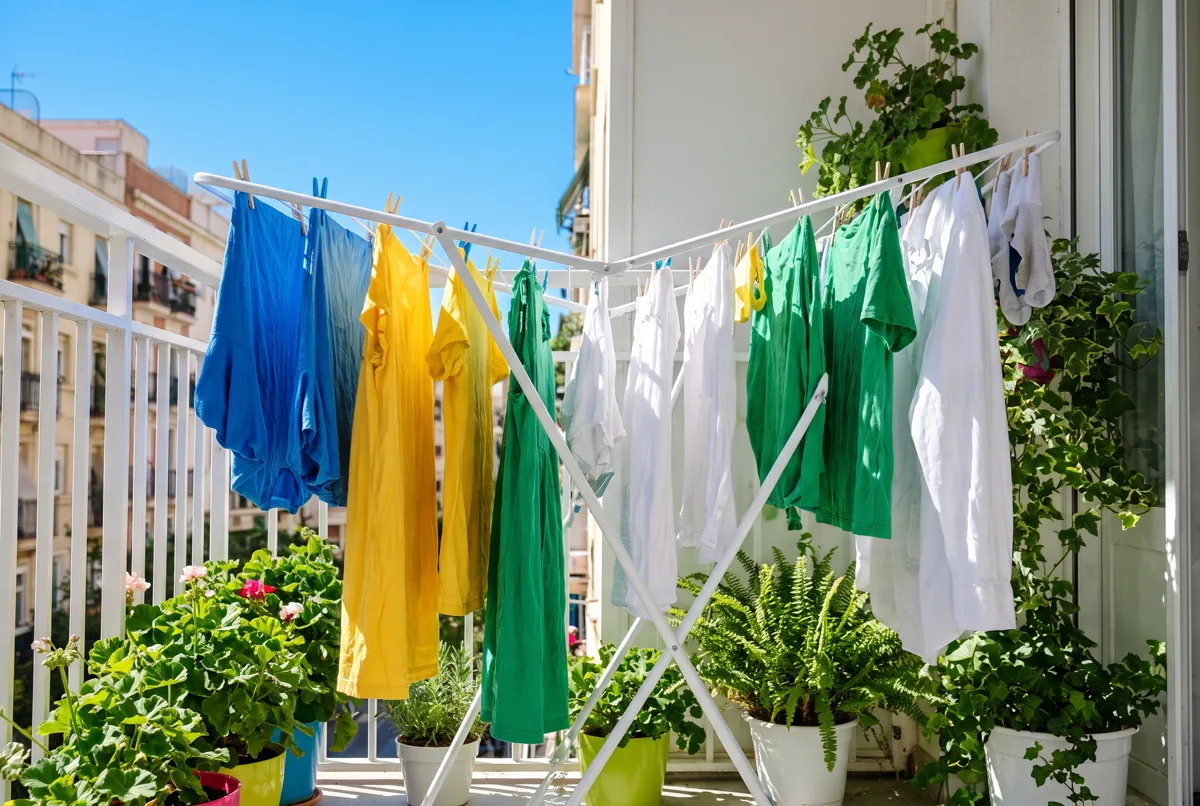
If you wash at night, think of your neighbours: many residents' associations have rules about noise during quiet hours. One option is to use the delayed start so the cycle finishes early in the morning, or to make use of the weekend. Also, hanging clothes out in the sun instead of using a tumble dryer is one of the best habits for using less in Spain, especially from spring to autumn.
For more ideas on time bands and tariffs, see the guide on how to save on your electricity bill in Spain.
Tips to make your washing machine use less
None of these changes works miracles on its own, but together they can help you cut the cost:
- Wash at 30 or 40 °C for normal clothes and keep hot water for what really needs it, such as very dirty kitchen cloths or the clothes of someone who is ill, as advised.
- Use the eco programme when you are not in a hurry.
- Fill the drum without packing it tight, and sort clothes by colour and fabric so you do not repeat washes.
- Treat stains beforehand instead of turning up the temperature. Removing a stain in time avoids a second wash.
- Adjust the detergent to the load and the hardness of your water: too much does not clean better and can force extra rinsing.
- Clean the filter and the detergent drawer every month or two, and watch for limescale if you live in a hard water area.
- Spin well if you are going to use a tumble dryer, which uses far more than the washing machine.
- Organise your laundry days so you wash less often with full loads.
The washing machine also uses water, so these habits help on both bills. If you want to keep going down that road, see how to save water at home in Spain.
Frequently asked questions
How much electricity does a washing machine use in an hour?
It depends on the phase of the programme. While it is heating the water it can reach approximately 2,000 W, but the rest of the time it uses much less. That is why it is more useful to look at consumption per wash than at power rating.
How much does a cold wash cost?
Approximately 3 to 10 cents of electricity, at the time of publication, depending on the tariff and the time of day. Water is paid for separately and depends on your municipality.
Does a quick programme or an eco one use more?
Normally the eco programme uses less even though it lasts longer, because it heats the water more gradually. Check the manual for your model.
Is it worth replacing an old washing machine?
If it works well, it does not always pay off for the electricity alone, because the saving per wash is small. If it is broken or very old, comparing the kWh per 100 cycles will help you decide.
Is it cheaper to wash at night?
Only if you have a tariff with prices by time band. With a fixed price, the time of day does not change the cost. Check your contract to find out.