
To get boiled eggs that peel easily, the most practical approach is to use eggs that aren't freshly bought, lower them carefully into water that is already boiling, cook them for just the right time and move them straight into very cold water. That sudden change in temperature helps the shell separate more cleanly from the egg white.
If you're looking for how to boil eggs so they peel easily, the key isn't a magic ingredient but a combination of a few small details: the age of the egg, the water temperature, the cooking time, the cooling and the way you peel it. With a little method, you can prepare eggs for salads, breakfasts, quick dinners or your weekly meal plan without leaving half the white stuck to the shell.
It's also worth accepting that not all eggs behave the same way. In Spain, eggs are sold with a best-before date, and depending on how fresh they are, they may peel better or worse. Even so, with the steps below you'll have a much better chance of getting clean, good-looking eggs.
How to boil eggs so they peel easily, step by step
This method is simple and works for medium or large eggs, the most common sizes at home. If the eggs have just come out of the fridge, you can leave them at room temperature for a few minutes while you get the saucepan ready, but there's no need to leave them out for long.
- Choose eggs that have been at home for a few days, not the ones you've just bought.
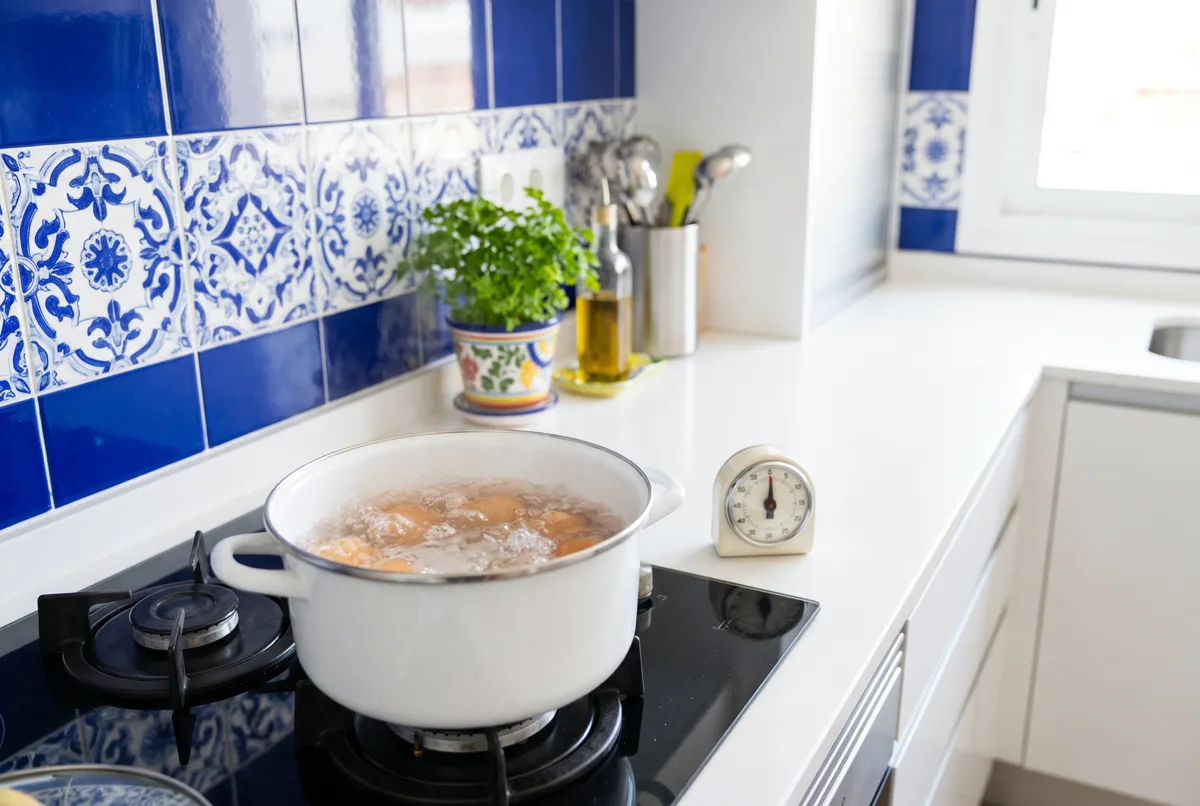
- Bring water to a boil in a saucepan, with enough to cover the eggs.
- When the water boils, turn the heat down a little so it doesn't knock the eggs around too hard.
- Lower the eggs in slowly with a spoon to avoid bumps and cracks.
- Cook for 9 to 12 minutes, depending on how you like the yolk.
- Immediately move them to a bowl of very cold water. If you have ice, even better.
- Let them cool for about 8 to 10 minutes before peeling.
- Gently tap the egg all over its surface and start peeling from the wider end.
The wide end usually has a small air pocket. Starting there helps lift the inner membrane and lets the shell come off in larger pieces.
Why some eggs peel worse than others
When an egg is very fresh, the membrane just beneath the shell tends to cling more tightly to the egg white. That's why, even if you cook it properly, it can be hard to peel and you end up tearing off little pieces of white.
Eggs that have spent a few days in the fridge usually peel better. There's no need to rush to use them up or to use eggs that are past their date, just avoid picking the very freshest ones if you want nicely peeled boiled eggs.
Which eggs to choose
- For good-looking boiled eggs: use eggs bought several days ago, within their date and properly stored.
- For omelettes or scrambled eggs: you can save the freshest eggs.
- For Spanish potato salad, homemade ramen or salads: boil several at once and cool them well before peeling.
If you're organising your meals for the week, you can combine this trick with some simple planning. On the blog you'll find a guide to planning your weekly meals without overcomplicating things.
Cooking times depending on the yolk
The time is counted from when the water returns to a gentle boil after you add the eggs. It can vary a little depending on the size of the egg, the power of your hob and whether the eggs were fridge-cold, so treat these times as a guide.
| Egg doneness | Approximate time | Result |
|---|---|---|
| Creamy yolk | 7 to 8 minutes | Set white and soft yolk in the centre |
| Slightly runny yolk | 9 to 10 minutes | A good consistency for toast or grain bowls |
| Classic hard-boiled egg | 10 to 12 minutes | Set yolk, ideal for salads and fillings |
| Very well done | More than 12 minutes | Can turn out drier, with a greenish ring |
If you want hard-boiled eggs to prepare ahead, 10 to 11 minutes is usually a convenient time for many households. If you cook them for too long, the yolk can dry out and a greenish-grey tone may appear around it. It isn't usually harmful in itself, but it looks less appetising.
When you prepare several staples for the week, writing down times and quantities saves you from having the same doubts every Sunday.
Tricks that help them peel better
There is no single foolproof trick, but several small habits that, together, make a difference. The important thing is to do them in order and not skip the cooling step.
Boiling water instead of cold water
For easier peeling, it usually works better to lower the eggs carefully into water that is already boiling. If you start with cold water, the egg heats up more gradually and the membrane can end up more firmly attached.
Cold water bath
Cooling the eggs quickly stops the cooking and helps the egg contract slightly inside the shell. You can use a bowl of cold tap water with a few ice cubes. In summer, especially in many parts of Spain, tap water can come out less cold, so ice helps even more.
Rolling the egg before peeling
Once it's cold, tap the egg on the worktop and roll it gently under the palm of your hand. The idea is to break the shell into lots of small cracks without squashing the egg.
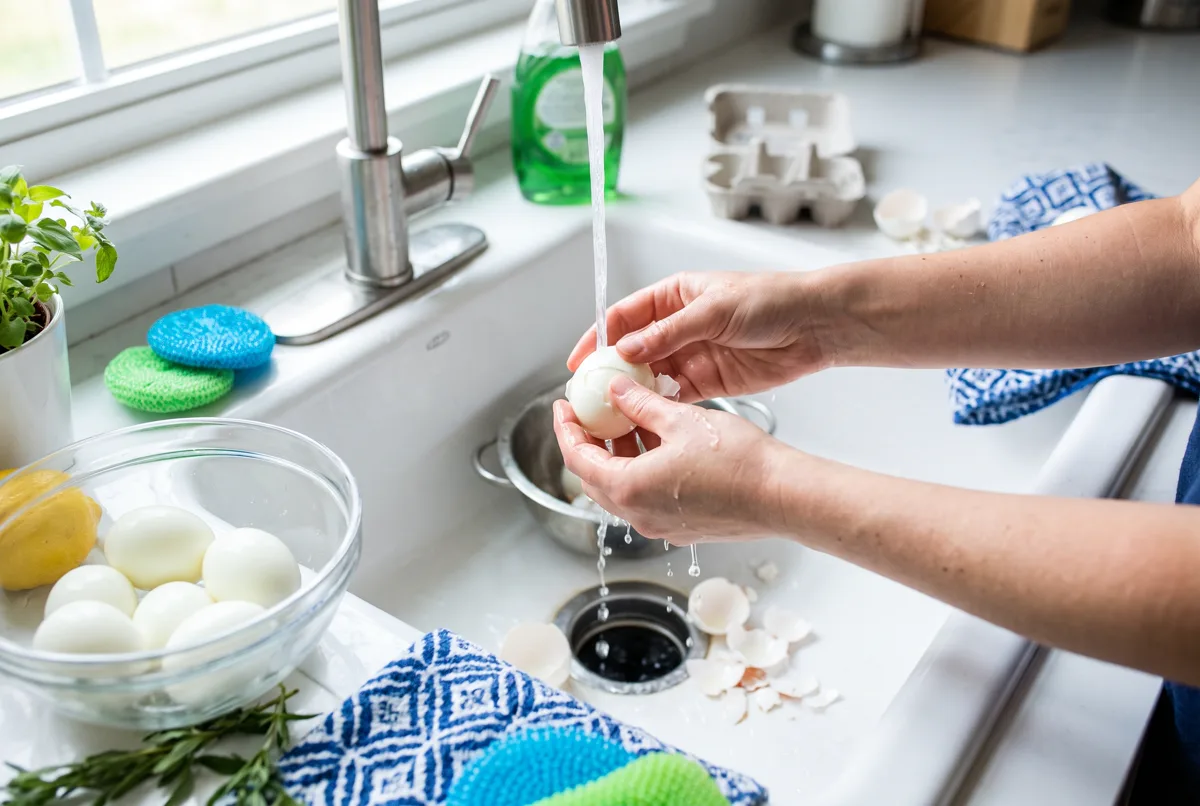
Peeling under a thin stream of water
If it's stubborn, peel it under a thin stream of cold water. The water can get in between the shell and the membrane, helping the shell come away with less tugging.
If you enjoy small, repetitive kitchen tasks, peeling eggs can be almost relaxing. There are also times when you want to switch off with something just as simple, like a relaxing game at home.
Salt, vinegar and baking soda: what they really do
There's plenty of home advice about adding salt, vinegar or baking soda to the water. They can help in some cases, but it's worth knowing what to expect from each one.
- Salt: if an egg cracks, it may help keep the white from escaping as much, but it isn't what matters most for easy peeling.
- Vinegar: it can also help the white coagulate if there's a crack. Use just a small splash so it doesn't leave a strong smell.
- Baking soda: some people use it to slightly change the water, but it can leave a taste if you overdo it and isn't essential.
If you want a simple formula, stick with this one: eggs that aren't freshly bought, boiling water, controlled cooking and very cold cooling. It's easier to repeat than changing ingredients every time.
Common mistakes when boiling eggs
Sometimes eggs peel badly because of very everyday details. Go through this list before deciding the problem is your saucepan or the way you cook.
- Using eggs that are too fresh: this is one of the most common reasons the shell sticks.
- Dropping them in all at once: they can crack when they hit the bottom of the saucepan.
- Boiling at a hard, rolling boil: the eggs knock against each other and crack.
- Not cooling them right away: they keep cooking and the shell may separate less cleanly.
- Peeling them while hot: the white is more delicate and tears easily.
- Cooking too many in a small saucepan: they have less room to move and knock together more.
If you do batch cooking, boiling eggs is one of those small tasks that fits in very well with rice, vegetables, pulses or potatoes. You can find ideas in this guide to weekly batch cooking.
So you don't forget the cooking time, you can set a reminder on your phone. The Canvartin: Planner and Appointments app lets you organise tasks, habits and reminders, and also print A4 planners from your phone if you use that feature.
How to peel a boiled egg without ruining it
Once the egg is cooked and cold, the peeling technique matters. Don't just yank off big pieces, because you can take some of the white with them.
- Give each end of the egg a gentle tap.
- Roll the egg on the worktop to crack the whole shell.
- Start at the wider end.
- Find the thin membrane and pull it away together with the shell.
- If it sticks, hold the egg under cold water and carry on calmly.
If you're making stuffed eggs, Spanish potato salad or a platter for guests, boil a few more than you need. That way, if one breaks or looks less pretty, you can chop it up and use it in another recipe.
To organise your kitchen and keep eggs, vegetables, food containers and staples within easy reach, this guide to how to organise your fridge so food lasts longer may help.
How to store boiled eggs
Once cooked, eggs should be cooled and kept in the fridge if you aren't going to eat them soon. As a general guideline, it's better to store them in their shell until you're ready to use them, because they're better protected that way.
Storage times can depend on the temperature of your fridge, on whether the eggs are peeled or not and on how they've been handled. At the time of publication, the cautious advice at home is to keep them refrigerated, in a clean container, and eat them within a few days. If they smell odd, have a bad texture or you have any doubts, it's better not to eat them.
For more detail, there's a specific guide on how long a boiled egg lasts in the fridge. And if you also want to organise your shopping and menus, this list of ideas for saving money on food in Spain may come in handy, with approximate recommendations that can change depending on the area, prices and each household's habits.
Frequently asked questions
Is it better to boil eggs starting in cold water or in boiling water?
For easier peeling, it usually works better to carefully lower them into water that is already boiling and then cool them quickly in very cold water.
How long should you boil a hard-boiled egg?
As a guide, between 10 and 12 minutes from when the water returns to a gentle boil. It depends on the size of the egg and how you like it.
Does salt help peel eggs?
Salt can help if the egg cracks, because it slightly reduces the amount of white that escapes, but it isn't the main factor for peeling easily.
Why does the white tear when peeling?
It usually happens because of using very fresh eggs, not cooling them enough or pulling at the shell without lifting the inner membrane.
Can I boil eggs in advance?
Yes, you can boil them ahead of time and keep them in the fridge in a clean container. It's best to keep them in their shell if you aren't going to use them right away.