
A modern fridge in Spain uses, as a rough guide, between 12 and 30 kWh a month, which usually works out at approximately 2 to 6 euros a month on your electricity bill. If your fridge is quite old, large or an American-style model, consumption can climb to 35 or 50 kWh a month, which is approximately 6 to 10 euros a month. These figures are approximate as of the publication date: they depend on the model, how you use it and, above all, the price per kWh on your tariff.
The fridge is one of the few appliances that runs 24 hours a day, 365 days a year. So even though it doesn't use as much as an oven or an air conditioner at any given moment, its consumption adds up over the year. Knowing how much electricity a fridge uses helps you understand your bill and decide whether it's worth changing a habit or, when the time comes, the appliance itself.
In this article you'll find approximate figures by type of fridge, how to work out your own fridge's consumption in a few minutes, and what you can do to keep it to a minimum without any hassle.
How much electricity a fridge uses by type
Not all fridges use the same amount. Size, age and energy rating make a big difference. This table gives approximate ranges calculated with a price of about 0.20 euros per kWh, a mid-range value that may be higher or lower for you depending on the tariff you have.
| Type of fridge | Approximate consumption per year | Approximate consumption per month | Approximate cost per month |
|---|---|---|---|
| Small or under-counter fridge | 100 to 150 kWh | 8 to 13 kWh | 1.6 to 2.6 euros |
| Modern high-efficiency fridge-freezer | 150 to 250 kWh | 12 to 21 kWh | 2.4 to 4.2 euros |
| Modern medium-efficiency fridge-freezer | 250 to 350 kWh | 21 to 29 kWh | 4.2 to 5.8 euros |
| American-style double-door fridge | 350 to 500 kWh | 29 to 42 kWh | 5.8 to 8.4 euros |
| Old fridge-freezer (more than 12 or 15 years) | 400 to 600 kWh or more | 33 to 50 kWh | 6.6 to 10 euros |
Keep in mind that these figures are only a reference. Two fridges of the same size can use very different amounts depending on their energy rating and where in the kitchen they are placed.
How to work out how much your fridge uses, step by step
If you want to know how much a specific fridge uses, yours, you don't need to be an expert. Just follow these steps.
- Find the energy label. It's usually inside the fridge, on one of the sides or in the manual. On fridges sold in Spain in recent years, there is a figure in kWh/annum, which is the estimated annual consumption under test conditions.
- If you can't find the label, look for the rating plate (a sticker with the model number) and look that model up in the manufacturer's documentation. Sometimes the plate directly states the consumption over 24 hours, in kWh/24h: multiply it by 365.
- Divide the annual consumption by 12. For example, a fridge that uses 240 kWh a year uses about 20 kWh a month.
- Check the price per kWh on your bill. Look at the energy charge. If you have a time-of-use tariff, you can use an approximate average, because the fridge runs at all hours.
- Multiply. 20 kWh x 0.20 euros = approximately 4 euros a month, not counting taxes or the power charge, which you pay whether or not you own a fridge.
Why multiplying watts by 24 hours doesn't work
This is a very common mistake. The plate may show a power rating of 100 or 150 W, but the compressor doesn't run non-stop: it switches on and off to keep things cold. If you multiply the power by 24 hours you'll get a hugely inflated figure. The reliable number is the annual consumption on the label, or a real measurement.
Measuring real consumption with a plug-in energy meter
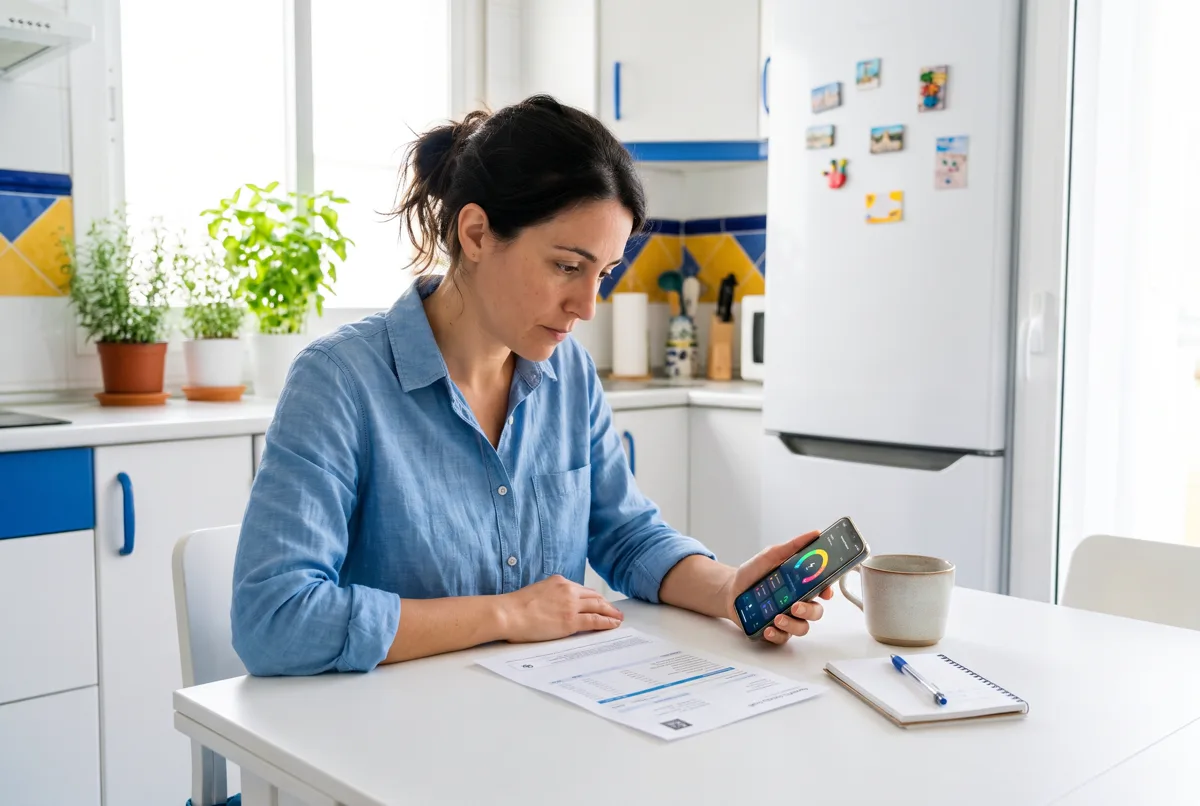
If you want the exact figure for your home, you can use an energy meter that plugs in between the socket and the fridge. Leave it for at least a full week, because consumption varies depending on how often you open the door, and then multiply to estimate the month. In summer you'll see it go up, which is normal with the heat in many parts of Spain.
If you'd like to keep track of these numbers, it can help to note them down each month alongside the rest of your household spending, either in a paper budget planner or in the expenses section of the Canvartin: Agenda and Appointments app.
What makes a fridge use more electricity
Several factors can push consumption up, and many of them are easy to fix:
- Age. The insulation and compressors of 15 years ago are less efficient than today's.
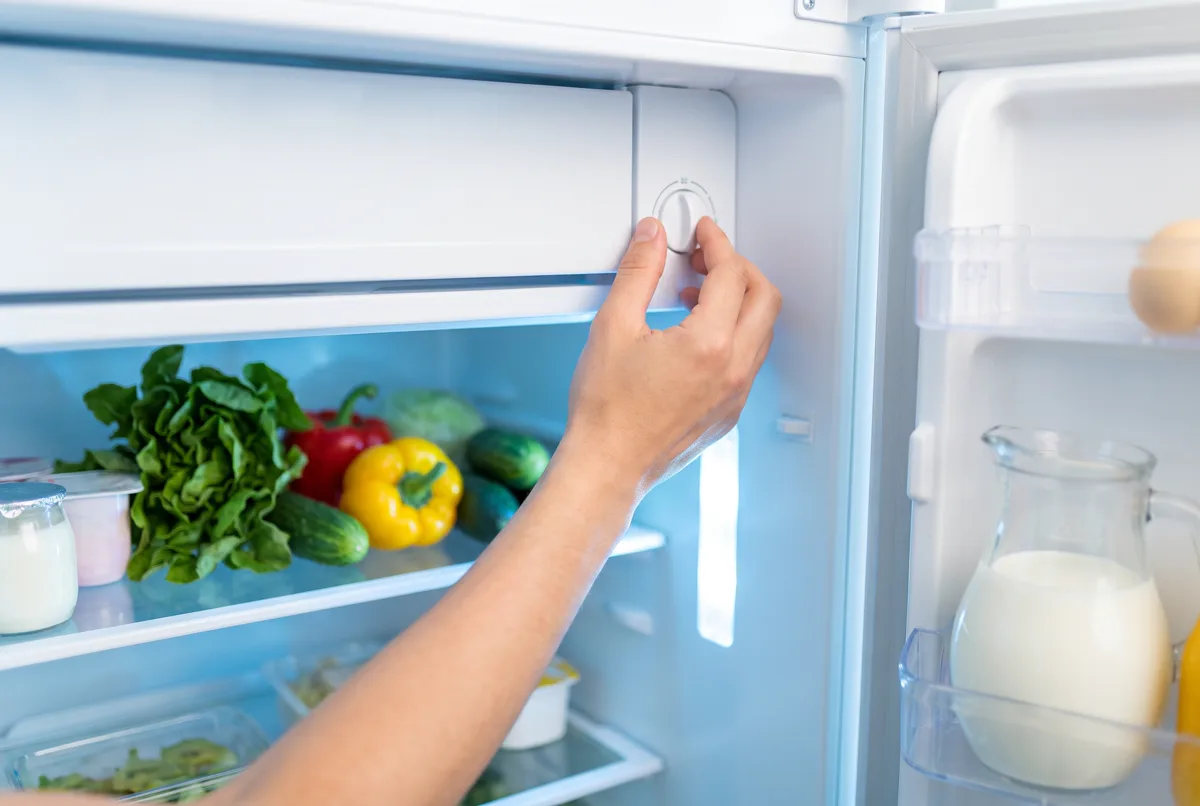
- The temperature setting. Setting it colder than necessary makes the compressor work harder. You can review what temperature the fridge and freezer should be set to to adjust it properly.
- Location. Next to the oven, the ceramic hob or a window that gets direct sun, the fridge has to work harder to cool down.
- The door seals. If they're worn, warm air keeps getting in.
- Opening the door many times or leaving it open while you decide what to cook.
- Putting in hot food. The appliance has to get rid of that extra heat.
- Ice build-up in the freezer, in models without a frost-free system. A thick layer of frost acts as insulation and reduces efficiency.
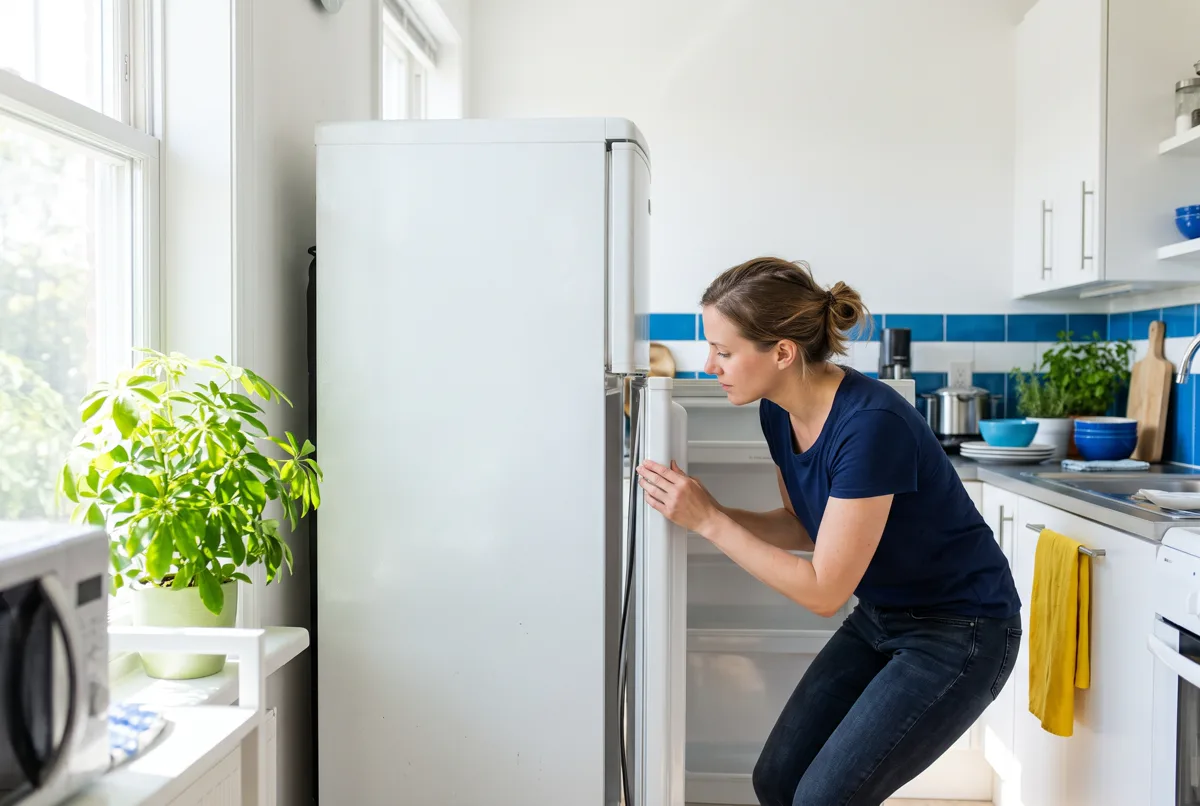
- Dust on the back grille. It makes it harder for the appliance to release heat.
Tips to make your fridge use less
They won't work miracles, and the result depends on each fridge, but these are simple habits that help it run with less effort:
- Adjust the temperature to about 4 or 5 °C in the fridge and about -18 °C in the freezer, which are the values usually recommended.
- Leave a few centimetres of space between the back of the fridge and the wall so air can circulate.
- Let food cool down at room temperature before putting it away, without leaving it out too long for food safety reasons.
- Defrost in the fridge. Moving a frozen container to the fridge the night before gives off cold as it thaws.
- Check the seals with the paper trick: close the door on a sheet of paper; if it slides out without resistance, the seals are worth checking.
- Clean the back grille once or twice a year, always with the fridge unplugged.
- Defrost the freezer when the frost is more than a few millimetres thick, if your model isn't frost-free.
- Organise the inside so you can find everything quickly and keep the door open for less time. Here are some ideas for organising your fridge so food lasts longer.
Tidying the fridge, cleaning the kitchen or washing the dishes can also be pleasant moments if you do them calmly. If you feel like switching off with pretend housework, no rush and with relaxing sounds, the Canvartin: Home Simulator game is exactly that.
Is it worth replacing an old fridge?
This is a very common question once you find out how much an old fridge uses. Here's a rough example:
- Old fridge: about 500 kWh a year.
- New efficient fridge of the same size: about 200 kWh a year.
- Difference: about 300 kWh a year, which at 0.20 euros per kWh is approximately 60 euros a year.
With a new fridge-freezer costing approximately 400 to 900 euros, replacing it purely for the electricity savings takes many years to pay off. So the most sensible approach is usually to consider replacing it when the fridge starts to fail, makes strange noises, doesn't keep things cold properly or needs an expensive repair.
What to look for if you're buying a new one
- The annual consumption in kWh, more useful than the letter rating, because it lets you compare models directly.
- The real size you need. A huge fridge that's half empty uses more than necessary.
- The space available, leaving some room for ventilation.
- Grants and subsidies. In Spain, there are sometimes appliance replacement schemes that depend on each autonomous community (regional government) and change over time. Check your region's official website before buying.
How much the fridge weighs on your electricity bill
In an average home in Spain, the fridge can account for a noticeable share of electricity consumption, because it never switches off. To put it in context, it helps to know how many kWh a home uses per month in Spain and compare that with your fridge's figure.
One important point: unlike the washing machine or the dishwasher, the fridge can't be scheduled for the cheapest hours. If you have a time-of-use tariff, its consumption is spread across all the time bands. What you can do is cut down what it uses with the tips above and review your other habits. You'll find more ideas in the article on how to save on your electricity bill in Spain.
How to include it in your budget
Because the fridge's consumption is fairly steady, you can treat it almost like a fixed cost within your electricity bill. Write down each month's bill and see how it varies between winter and summer. If you'd like to get everything in order, here we explain how to make a monthly household budget in Spain, with an example.
Frequently asked questions
How much electricity does a fridge use per day?
A modern fridge uses approximately 0.4 to 1 kWh per day. Older or larger ones can exceed 1.2 kWh a day. These are approximate values that depend on the model and how it's used.
Does the fridge use more in summer?
Yes, normally. With high temperatures in the kitchen, the compressor works harder to keep things cold, so it's common for consumption to rise during the hot months.
Should I switch off the fridge when I go on holiday?
For just a few days it's usually not worth it. For long absences, you can empty it, unplug it, clean it and leave the door slightly open to prevent odours and mould. Check beforehand what to do with the freezer.
Does a frost-free fridge use more electricity?
It can use a little more because of the fan and the defrost cycles, but it avoids frost build-up, which also reduces efficiency. Always compare the annual consumption shown on the label.
How much does it cost to run a fridge for a year?
As a rough guide, between approximately 25 and 70 euros a year for a modern fridge, and more for older or American-style models. It depends on the price per kWh on your tariff, which can change.