
Anti-stress toys are objects you can squeeze, spin, slide or handle repetitively. A ball offers gentle pressure; a ring lets you move your fingers discreetly; a cube combines several mechanisms; and a textured piece gives a tactile sensation. The choice depends more on what feels pleasant to you than on what happens to be trending.
They can work as a short bit of entertainment or as a way to keep your hands busy while you wait. Some people find that repeated movement pleasant, while others get distracted or tired of it. The name "anti-stress" does not mean the object treats anxiety or that it will improve your concentration.
If you are looking for something for a break between tasks, for listening to a call or for switching off when you get home, it is worth telling the types apart before you buy. You do not need a collection: one comfortable object that is easy to store and suits the place where you will use it may be enough.
Anti-stress toys: what types there are and what each one is for
The main difference is the gesture each toy invites. Think about what you already do when your hands are idle: turn a ring, squeeze a cushion or click a pen. That habit is a clue, although it does not mean any similar object will suit you.
| Type | What you do with it | When it might fit | What to check |
|---|---|---|---|
| Soft ball | Squeeze and release | A break without looking at a screen | Comfortable resistance and an intact surface |
| Spinner ring | Spin a band or a piece | When you prefer something small and discreet | Size, material and possible rubbing |
| Anti-stress cube | Press, slide, spin and roll | When you like to alternate movements | Noise and how firm the parts are |
| Bubble panel | Push bubbles in and pop them back out | A simple, repetitive activity | Sound, size and cleaning |
| Putty | Knead, stretch and shape | A break while seated at a table | Composition and compatibility with the surface |
| Articulated or textured pieces | Bend, run your fingers over ridges or slide | When you want tactile variety | Joints, edges and parts that could come loose |
Not all of them let you do something else at the same time. An object that demands constant attention can suit a break, but not while you are reading instructions or going over accounts. If you lose your train of thought, it is better to keep it for resting rather than for accompanying that task.
It is also worth distinguishing a handheld toy from a full activity. If what you fancy is spending a while playing, you can explore these ideas for anti-stress games with and without screens, instead of looking for an object to fiddle with while you do something else.
Anti-stress rings: discreet movement for your fingers
Anti-stress rings usually have an outer band that spins around an inner one, or small moving pieces. Their main practical advantage is that they take up little space and you can wear them. Not all of them are silent: some produce a rubbing or jingling sound that can be noticed in a quiet room.

What to look at before choosing one
- The size: it should feel comfortable and let you take it off without difficulty. Do not pick a tight one to stop it from moving.
- The finish: check that there are no rough edges, snags or spots that pinch when it turns.
- The material: check the composition stated by the seller, especially if you already know that certain metals cause a reaction on your skin.
- The movement: a band that is too stiff can make you use more force than you would like.
It might suit you for listening to a conversation or sitting through a wait. On the other hand, you should take it off for tasks where it could catch, get dirty or get in the way of your work. If it causes discomfort or irritation, stop using it.
You do not need to wear it all day. You can keep it with your everyday things and decide whether you really miss it. If it ends up bothering you more than it entertains you, a desk piece may be a better option.
If you organise your tasks on paper, leave some space for breaks too: not every gap in your planner has to turn into another obligation.
Anti-stress cube: several sensations in one object
An anti-stress cube brings together different surfaces: buttons, switches, wheels, small balls or smooth areas to run your thumb over. It is interesting if you get bored of repeating exactly the same gesture, but that variety can also draw more of your attention.
Before buying one, look at which mechanisms it actually includes. A photo cannot tell you how loud the buttons are or whether the spinning is smooth. If you can try it in a shop, do so without forcing any part, and listen to the noise in conditions similar to where you will use it.
How to use it without it becoming another distraction
- Explore its sides during a break, without trying to work at the same time.
- Identify the movement that feels most comfortable and the one that makes the least noise.
- Try using only that side while you listen to something simple.
- Put it away if you start looking at the cube more than paying attention to what you were doing.
For a shared table, a library or a meeting, prioritise the sides without a click. If it can still be heard, use it at another time. Just because the sound is pleasant to you does not mean it is pleasant to those nearby.
If you prefer a digital activity for your break, Canvartin: Home Simulator is a calm mobile game with small tasks such as watering plants, cleaning windows or washing dishes, accompanied by relaxing sounds. It is a leisure option, not a treatment tool.
When you fancy a more visual break, a simple virtual task may suit you better than continuing to fiddle with an object.
Other anti-stress objects: balls, bubbles, putty and textures
There are very different options among anti-stress objects. Before choosing by looks, think about whether you want to feel pressure, hear a sound or run your fingers over a texture. That distinction saves you from buying several products that do not match what you were after.
Soft balls and figures: squeeze and release
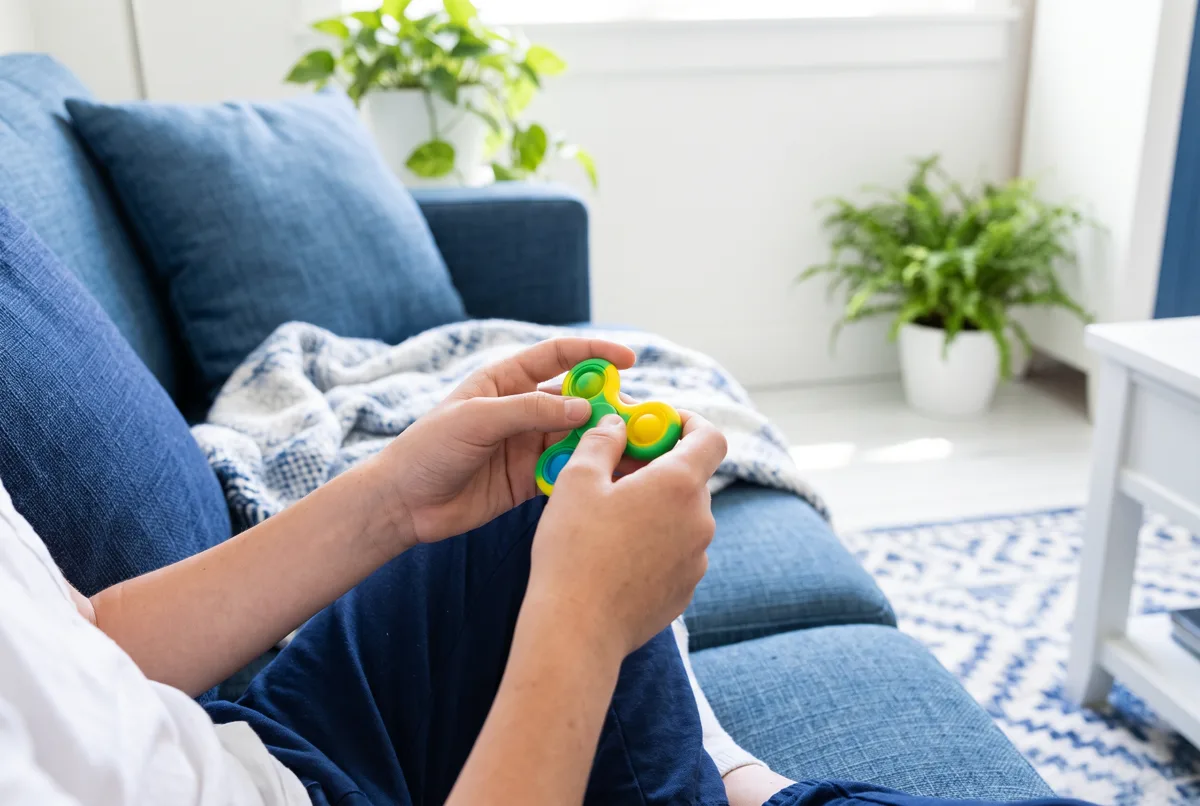
Balls made of foam, gel or other fillings offer different levels of resistance. Choose one you can squeeze comfortably, without gripping hard or keeping your hand rigid. More firmness does not mean more usefulness for a break.
Figures that slowly regain their shape add a visual element: you can watch them return to their original state. Check the usage instructions and stop using them if they show cracks, loss of filling or a deteriorated surface.
Bubble panels: repetition with sound
Bubble panels, also known as pop its, let you press a sequence and start again from the other side. You may like them if you want a simple gesture without having to solve anything. Their size and sound make them less discreet than a ring.
Before putting one in your bag, think about where you will use it. A large panel can be comfortable at home and impractical on a journey. You also do not need to complete every bubble each time: you can put it down whenever you like.
Putty and textured pieces: exploring with your hands
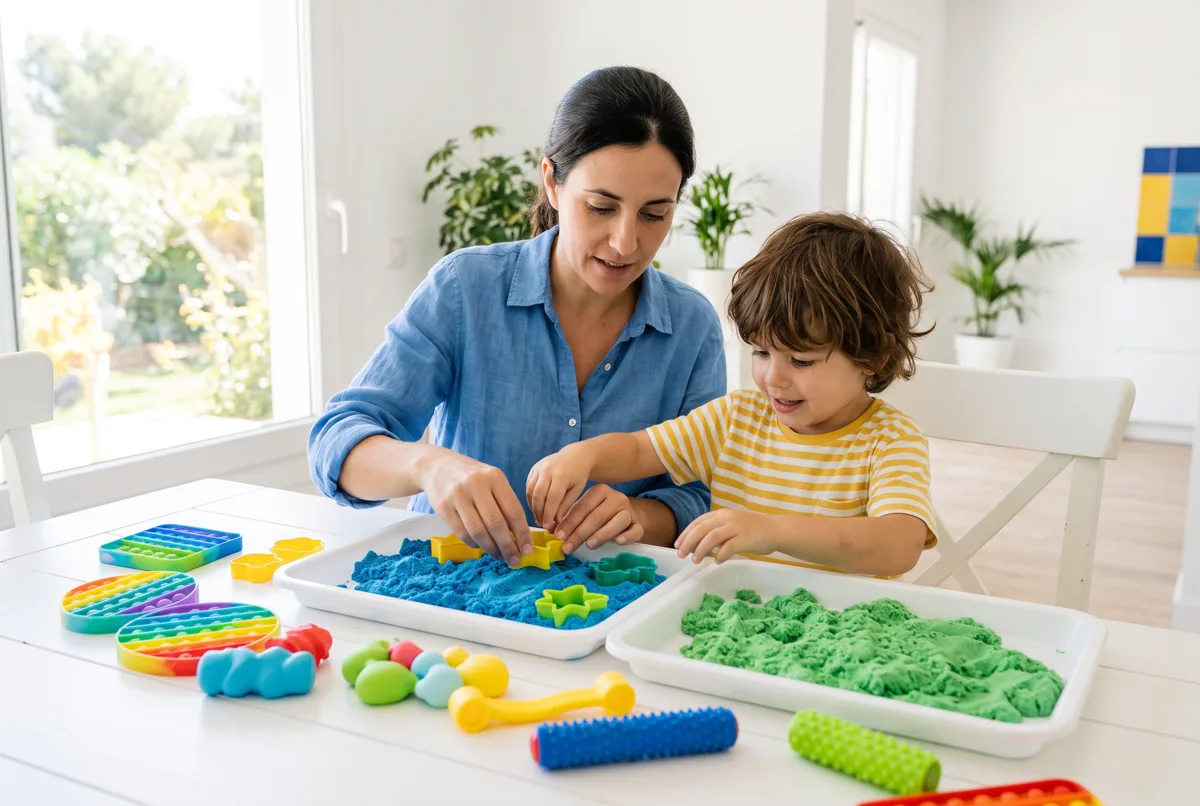
Putty lets you knead or stretch it, but it needs more attention to your surroundings. Some types can leave residue or stick to fabrics. Follow the instructions and use it on a suitable surface, away from documents, rugs and electronic devices.
Pieces with ridges or joints are another possibility if you prefer something dry and easy to store. Run your fingers over them gently and check that the joints do not pinch your skin. An intense texture is not necessarily more pleasant than a smooth one.
How to choose, buy and care for your anti-stress toy
To start with, choose by where you will use it rather than by the number of features. A big set may look appealing, but it adds objects you will then have to store, clean and check.
- For a shared table: look for low noise and a movement that does not require looking at it.
- For resting at home: you could consider a ball, putty or a panel that you use only during the break.
- To carry with you: prioritise a small size, durability in transit and no fillings that could spill.
- For a home with little ones or pets: pay particular attention to small parts and where you store it.
What to check when buying in Spain
Check the product identification, the declared materials, the instructions and the warnings. If it is intended for children, check the age stated and that the intended use fits the person who will use it. An accessory designed for adults should not be assumed suitable for a child just because it has eye-catching colours.
Do not rely solely on phrases such as "improves concentration" or "eliminates stress". These are marketing claims that do not explain how the object will behave in your case. To look up safety notices, go to the official consumer portals in Spain or to the consumer authority of your autonomous community (comunidad autónoma, the regional government).
Decide how much you want to spend before looking at models, and factor in possible delivery costs too. If you tend to build up small impulse purchases, you can include them in your monthly household budget, within a leisure or personal spending category, without turning the toy into a necessity.
Hassle-free cleaning and storage
Follow the manufacturer's instructions: not all materials tolerate water, soap or disinfectants. Metal mechanisms can deteriorate with moisture, and putty usually needs to be kept in its container. Avoid improvising cleaning mixtures.
Store the object clean and dry, where applicable, in a tray or case. Check the seams, joints and moving parts from time to time. If it breaks, do not leave it within reach of children or pets while you decide how to dispose of it.
How to fit it into a break without adding another obligation
A toy can accompany a rest, but it does not replace sharing out your tasks or stopping them for a moment. If you feel overwhelmed because you have too many things pending, continuing to squeeze a ball while you take on more jobs may not be the break you need.
- Pick a specific moment: after finishing a task, during a quiet wait or after clearing the table.
- Try just one object: that way you can tell whether you like the gesture or only the novelty of having something new.
- Notice how it feels: pleasant, indifferent, annoying or too absorbing. Any of those responses is valid.
- Decide when to put it away: you do not need to finish a sequence or meet a goal.
For example, after going over the household expenses you can close the notebook, set the receipts aside and handle a ball while you rest your eyes from the papers. If you would rather not hold anything, you are not missing any tool either.
To widen your options, here are some suggestions for relaxing your mind without forcing yourself to empty it and some ideas for switching off from work when you get home. The useful criterion is that the break feels manageable, not that you do it in a particular way.
Frequently asked questions
Which anti-stress toy is best to start with?
The one that fits the gesture you like and the place where you will use it. A soft ball lets you squeeze; a ring takes up little space; a cube offers variety. Start with one, without buying a set to try everything.
Do anti-stress rings help you concentrate?
Some people find it comfortable to keep their fingers busy, while others find it distracting. It cannot be taken for granted that they improve concentration. If you lose track of what you are reading or listening to, keep it for breaks.
What is the difference between an anti-stress cube and a puzzle cube?
The anti-stress one usually offers independent mechanisms, with no solution to reach. The puzzle one poses a challenge of arranging pieces and demands more attention. Both can be entertaining, but they do not offer the same experience.
Are these objects useful for treating anxiety?
They should not be considered a treatment or a substitute for professional care. They can be entertainment objects or accompany a break. If your discomfort interferes with your daily life, consult a healthcare professional.
Can they be shared with children?
It depends on the product, its condition and the age stated by the manufacturer. Do not automatically share rings, putty or pieces designed for adults. Check the warnings and keep out of reach any object that is small, broken or has components that could come off.