
A basic shopping list you will actually use has to be short, realistic and matched to your meals for the week. The point is not to copy a huge list from the internet, but to have a fixed base, add what is missing at home and check your menu before heading out.
The key is to split it by supermarket area, add approximate quantities and leave a little room for the unexpected. That way you avoid impulse buying, doubling up on things you already have and forgetting basics like eggs, fruit, bread or toilet paper.
In Spain, prices vary quite a lot depending on the area, the season and the type of shop, so any budget should be taken as a rough guide, valid at the time of publication. What matters is not getting it right to the cent, but knowing what you need and roughly how much you can spend.
Basic shopping list: what it needs to actually work for you
A basic shopping list is not a bare-minimum survival list, but a list of your household staples. It includes the foods and products you use almost every week, with room to adapt the menu, the budget and your family's tastes.
To make it practical, it helps to split it into blocks:
- Fresh food: fruit, vegetables, eggs, yogurts, cheese, meat, fish or plant-based alternatives.
- Pantry: rice, pasta, pulses, tinned food, flour, oil, salt, spices and nuts.
- Freezer: frozen vegetables, fish, bread, meat or homemade ready meals.
- Breakfasts and snacks: milk or plant-based drink, coffee, herbal teas, oats, bread, fruit, nuts.
- Cleaning and household: laundry detergent, dish soap, bin bags, toilet paper, cleaning cloths.
- Personal care: shower gel, shampoo, toothpaste, pads or tampons, deodorant.
The difference between a useful list and one you abandon after two days usually comes down to the level of detail. If you write "vegetables", you will have to decide everything once you get to the shop. If you write "courgettes (zucchini), carrots, broccoli and a bag of salad", you shop faster and with fewer doubts.
How to make a healthy shopping list without overcomplicating it
A healthy shopping list does not have to be perfect or expensive. Day to day, it can be built around simple foods you can find in any supermarket, municipal market or neighbourhood shop in Spain.
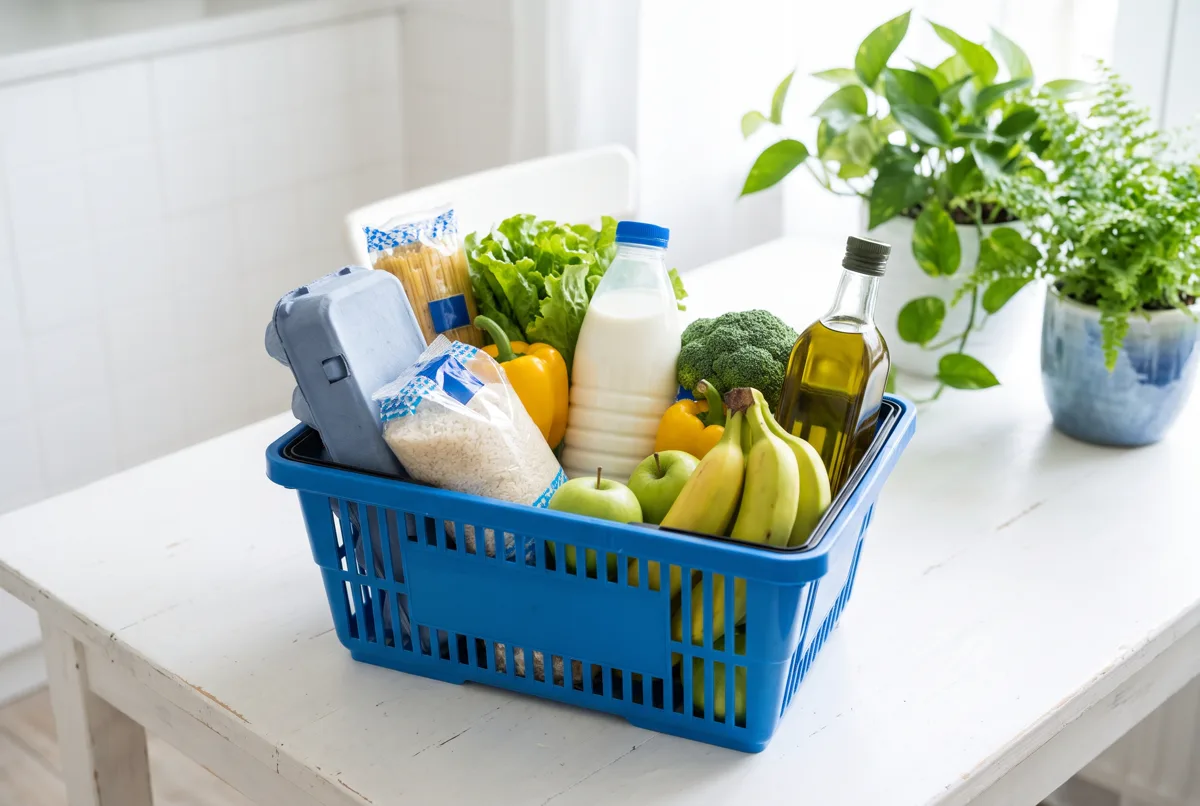
An easy way to approach it is to think in complete meals, not individual products. For example, if you buy chickpeas, spinach and eggs, you already have several possible meals. If you buy rice, vegetables and chicken, you can make a stir-fry, a warm salad or a packed lunch.
A healthy base for a normal week
- Vegetables: 4 or 5 kinds, mixing some for cooking and some for salad.
- Fruit: 2 or 3 seasonal varieties, which are easier to get through and usually better priced.
- Protein: eggs, pulses, fish, chicken, turkey, tofu, fresh cheese or plain yogurt, depending on what you eat at home.
- Carbs that are easy to combine: rice, pasta, potatoes, bread, oats or couscous.
- Everyday fats: olive oil, avocado when it fits your budget, nuts or seeds.
- Quick fixes: tinned fish, cooked pulses, crushed tomatoes, frozen vegetables.
If you find it hard to decide on menus, you can start by planning only lunches and dinners from Monday to Friday. In how to plan your weekly meals you will find a simple way to do it in very little time, without filling the fridge with ingredients you then never use.
The 5-step method before you go shopping
Writing the list right before you leave usually ends in forgotten items. It is better to spend a few minutes the day before or in the morning, with the fridge open and your menu in front of you.
- Check the fridge: note what is about to expire or needs to be used up first.
- Look at the pantry: check rice, pasta, pulses, tinned food, oil, coffee and breakfast basics.
- Check the freezer: write down what you already have so you do not buy duplicates.
- Decide on 4 or 5 main meals: there is no need to plan the whole week down to the last detail.
- Write it by section: fruit and vegetables, fresh food, pantry, frozen, cleaning and personal care.
This order also helps you make better use of what you already have. If you find half a packet of rice, a few carrots and a jar of chickpeas, you may not need to buy as much for that week's meals.
If you want to cut down on waste, it is also worth reviewing how you store food. In how to organise your fridge so food lasts longer you will find practical ideas for arranging fresh food, leftovers and opened products.
When the list is tied to a weekly plan, it is easier to repeat the system without having to think it through every time.
Example of a basic shopping list for one week
This example of a basic shopping list is designed for 1 or 2 adults in Spain, with simple meals. Adjust the quantities according to appetite, schedules, whether you eat out, whether there are children at home or whether you cook several portions to freeze.

Prices can vary a lot by city, season, shop and pack size. At the time of publication, a basic weekly shop for 1 or 2 people can fall roughly within very different ranges depending on the quality you choose, genuine special offers and whether you include cleaning and personal care products. Use it as a guide, not as a fixed figure.
| Section | What to buy | Approximate quantity |
|---|---|---|
| Fruit | Bananas, apples, oranges or seasonal fruit | 2 to 4 kg in total |
| Vegetables | Courgette (zucchini), carrot, onion, tomato, lettuce, broccoli | 5 to 7 items or bags |
| Protein | Eggs, chicken, fish, cooked pulses, plain yogurt | 4 to 6 options |
| Pantry | Rice, pasta, lentils, crushed tomatoes, tuna or sardines | 1 or 2 units of whatever is missing |
| Frozen | Frozen vegetables, fish, bread or a homemade portion | 1 to 3 products |
| Breakfasts | Milk, plant-based drink, oats, bread, coffee or herbal teas | Depending on weekly consumption |
| Household | Toilet paper, laundry detergent, dish soap, bin bags | Only if you are running low |
For a family, it is not enough to simply multiply everything. Sometimes big packs are worth it, and other times the food goes off before you finish it. If you are trying to trim your spending, it may help to read how to save money on food in Spain, with ideas for a weekly menu and list.
Shopping list template to copy and adapt
A good shopping list template should leave space for both the fixed and the variable items. You can make it on paper, in a note on your phone or in a simple spreadsheet. What matters is that it is within reach when something runs out.
Weekly template by section
- Fruit: ______________________________
- Vegetables: ______________________________
- Meat, fish, eggs or alternatives: ______________________________
- Dairy or drinks: ______________________________
- Bread, cereals and breakfast foods: ______________________________
- Rice, pasta, pulses and tinned food: ______________________________
- Frozen: ______________________________
- Cleaning: ______________________________
- Personal care: ______________________________
- Other: ______________________________
How to use it without rewriting it every week
- Keep a base version with your usual products.
- Before shopping, cross off what you already have.
- Add the ingredients from your weekly menu.
- Mark urgent items with an asterisk.
- Leave one line for treats or surprises, with an approximate limit.
If you like to take it with you on paper, you can print an A4 sheet and leave it in the kitchen. The app Canvartin: Planner and Appointments lets you print planners from your phone, blank or filled in with your own details, as a Premium feature or as a reward. You can also do it with a homemade template and follow this guide to print from your phone.
If organising your shopping overwhelms you, keep planning time separate from rest time, even if it is only ten minutes.
How to order your list so you shop faster
The order of the list matters. If you write everything mixed together, you wander around the supermarket, forget things and end up walking down the same aisle twice.
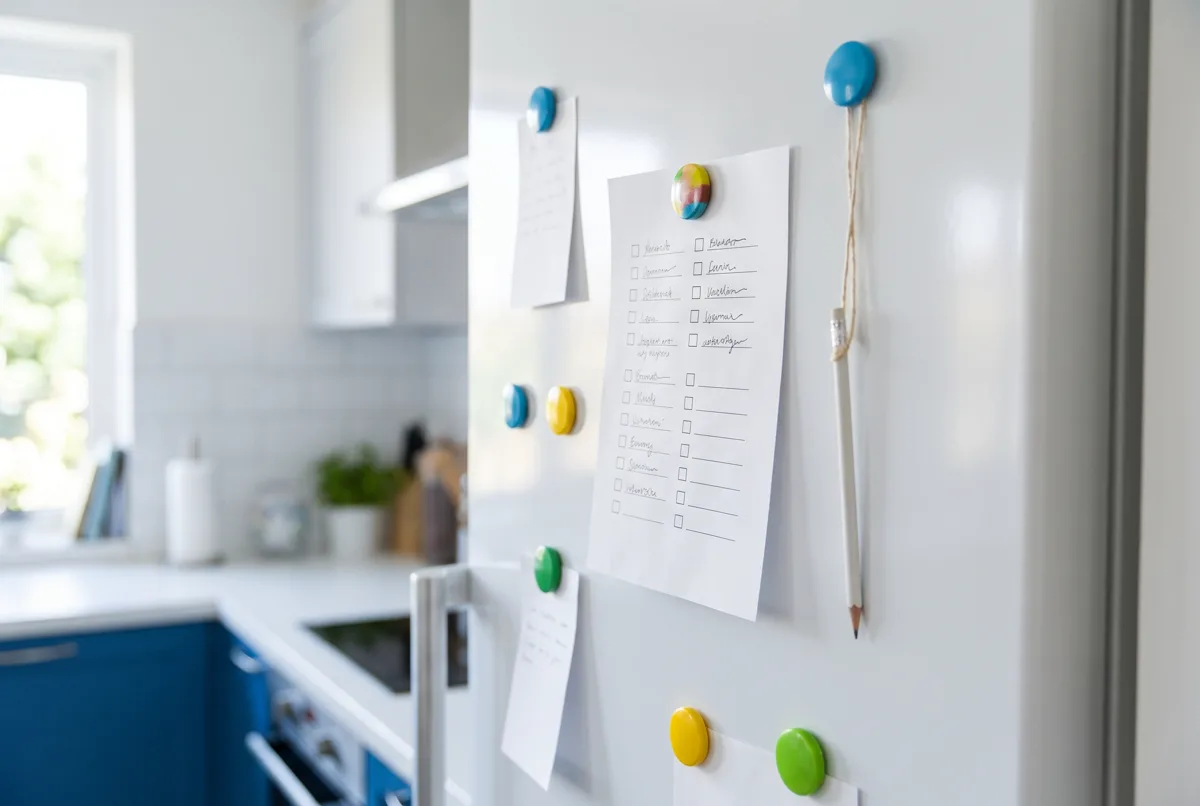
A practical approach is to order the list following the usual route through your shop. Every shop is different, but in Spain something like this tends to work:
- Fruit and vegetables.
- Bakery or packaged bread.
- Chilled fresh food: yogurts, cheese, meat, fish, ready meals.
- Pantry: rice, pasta, tinned food, oil, coffee.
- Frozen food.
- Cleaning and personal care.
- Heavy items last if you use a trolley (cart), such as large water jugs or big multipacks.
You can also put a mark next to anything that cannot be substituted. For example, if you need rice for a specific recipe, mark it as essential. If you do not mind which fruit you get, leave room to choose whichever is better priced or in season.
To stop the list from growing out of control, use a simple rule: if something new comes up that was not planned, decide whether it replaces something else or goes in the extras section. The aim is not to forbid yourself anything, but to buy with intention.
Common mistakes that make you stop using your list
Sometimes the problem is not a lack of organisation, but a list that is too rigid. These are very common slip-ups:
- Making the list too long: if it looks like a shop inventory, it feels like a chore to go through.
- Not checking what you already have: buying another packet of pasta when there were already three takes up space and money.
- Not thinking about your schedule: if you get home late several days a week, you need quick dinners, not long recipes.
- Buying ingredients "just in case": they usually end up forgotten if they have no dish assigned to them.
- Not checking expiry dates: especially on fresh food, yogurts, meat, fish and opened products.
- Separating the menu from the list: a list without a menu can fill up with random items that are hard to combine.
If your kitchen or pantry is messy, making the list takes longer. In how to organise your pantry you will find ideas for seeing at a glance what is missing and what should be used up first.
How to fit your list to your budget without obsessing
A shopping list can also help you control spending, without turning every shop into an impossible sum. In Spain, prices change by area, season, pack size and one-off offers, so the sensible approach is to work with approximate amounts.
A simple system is to divide your shopping into three levels:
- Essentials: food for the planned meals, basic breakfasts and necessary personal care products.
- Useful extras: products that make the week easier, such as frozen vegetables, tinned food or a simple ready-made item.
- Treats: sweets, snacks, special drinks, indulgences or products that are not part of the menu.
Before you pay, look at your trolley (cart) and ask yourself whether the treats fit your approximate budget. You do not have to cut them all out, but it helps to know they are there. If you need to review your whole monthly spending, it may be useful to put together a monthly family budget with clear categories.
Another useful idea is to have a "pantry week" every now and then. It means planning the menu around rice, pasta, pulses, tinned food, frozen vegetables or food you already have. It can reduce that week's shopping, although the result depends on what you have at home and on prices at the time.
If you prefer to organise yourself on paper, Canvartin paper planners, handmade in Spain, can help you bring your weekly menu, list and approximate budget together in one place, without relying on several loose notes.
Frequently asked questions
What is a good basic shopping list to start with?
Start with fruit, vegetables, eggs, pulses, rice, pasta, bread, milk or your usual drink, yogurts, oil, tinned food, a few frozen items, cleaning products and personal care basics. Then adapt it to the meals you actually eat.
How do I make a healthy, budget-friendly shopping list?
Prioritise seasonal produce, pulses, eggs, rice, pasta, simple vegetables, tinned food and basic frozen items. Prices are approximate and change depending on the area and the shop, so compare without obsessing.
Is it better to keep the list on paper or on your phone?
It depends on what you will actually use. Paper works well if you leave it visible in the kitchen. Your phone is handy if you shop on the way home from work or share the tasks. What matters is updating it right away.
How many times a week should you go shopping?
For many households, one main weekly shop plus a small top-up of fresh food works well. If you have little storage space, changing schedules or buy at a market, shorter shopping trips may suit you better.
What if I never stick to the list?
Shorten the list, leave an extras section and plan only 4 or 5 meals. A list that is too strict tends to be abandoned sooner. A simple list you use is better than a perfect one that stays at home.