
A balanced weekly menu is simply a plan of lunches and dinners for seven days that includes vegetables every day, pulses (beans, lentils and chickpeas) several times a week, fish, eggs and meat spread out without repeating, and fruit daily. You don't need to weigh anything or follow a diet: it's enough to spread the food groups well across the week and write it down before you go shopping.
The benefit of organizing it this way is twofold. On one hand, you eat a greater variety without having to think every day about what to cook. On the other, you buy only what you are going to use, throw away less food and save yourself that nine o'clock moment of staring into the fridge with no ideas.
In this article I explain how to put together your weekly balanced menu step by step, with a table of approximate frequencies, a sample of lunches and dinners designed around Spanish mealtimes and a few tricks to cook less without eating worse.
What a weekly balanced menu is and what it isn't
When we talk about balance in this article, we mean variety and common sense, not calories or strict regimes. A weekly balanced menu is not a diet menu, or a weight-loss plan, or something that has to be expensive or complicated.
The idea is that, when you look at the whole week, you can see that:
- There are vegetables at both lunch and dinner.
- Pulses appear several times, not just on the day you make a traditional Spanish chickpea stew.
- Fish, eggs and meat take turns.
- Rice, pasta, potatoes and bread are all present, but not all at once in every dish.
- Fruit is within reach for dessert or an afternoon snack.
If someone in your household has a specific dietary need, the right thing to do is follow the advice of their healthcare professional. This article is only a guide to organizing meals at home.
How to spread foods across the week
The most helpful trick is to think about the plate and the week at the same time. For each plate, a simple and widely used reference is to fill roughly half with vegetables, a quarter with a protein food (pulses, fish, eggs or meat) and another quarter with grains or potatoes. For the week, it's a good idea to spread each group according to an approximate frequency.

Approximate frequencies for a week
This table sets out a general, common-sense guideline, similar to what dietary guides usually suggest. Take it as a starting point, not a rule: every family adapts it to its tastes, budget and schedule.
| Food group | Approximate frequency | Easy ideas |
|---|---|---|
| Vegetables | At lunch and dinner, every day | Salad, puréed soup, stir-fry, Spanish-style ratatouille, oven-roasted side dish |
| Fruit | Daily, several pieces | Dessert, mid-morning, afternoon snack |
| Pulses | About 3 or 4 times | Lentils, chickpeas, beans, hummus, pulse salad |
| Fish | About 2 or 3 times | Hake, sardines, mackerel, tuna, frozen fish |
| Eggs | About 3 or 4 times | Omelette, scrambled eggs, hard-boiled egg in a salad |
| Meat | About 2 or 3 times, ideally varied | Chicken, turkey, stews, homemade meatballs |
| Rice, pasta, potatoes and bread | Spread across the week | Simple paella, pasta with vegetables, baked potato |
Lunch and dinner balance each other out
In Spain the main meal is usually at midday, around two o'clock, and dinner is late and somewhat lighter. Make the most of that: if you have pulses at lunch, a fish dish with vegetables or an omelette with salad fits well in the evening. If lunch was pasta, dinner can include more vegetables and some protein. That way the balance takes care of itself, without counting anything.
How to organize your balanced weekly menu step by step
Planning the week shouldn't take more than a short session at the weekend. If you want to go even faster, there is a detailed method in how to plan your weekly meals in 20 minutes. Here is the short version:
- Look at your schedule for the week. Note which days you eat out, who is having dinner at home, and whether there are after-school activities or work shifts. Busy days need quick dishes or leftovers.
- Check the fridge, the freezer and the pantry. What you already have decides the first dishes of the week, especially anything that expires soonest.
- Place the pulses and the fish first. They are the ones most often forgotten. Spread them over different days.
- Fill in with eggs and meat. Alternate so the same thing doesn't appear two days in a row.
- Add vegetables to every dish. As a starter, as a side or inside the stew itself.
- Decide on the sides. Rice, pasta, potatoes or bread, spread out.
- Make the shopping list from the menu. Ordered by supermarket section so you don't have to walk around in circles.
Keeping it in view helps a lot with sticking to it: stuck on the fridge or on a cupboard door, the whole family knows what's on each day. If you use the app "Canvartin: Planner and Appointments", you can print a planner on an A4 sheet from your phone, blank or already filled in with your details (it's a Premium feature that can also be earned as a reward).
If you prefer to write the menu by hand every Sunday, a paper weekly planner is a handy way to have lunches, dinners and the shopping list on the same sheet.
Sample balanced weekly menu
This example is designed for a home in Spain, with traditional dishes that are easy to prepare. Feel free to change it: what matters is the distribution, not the specific dishes.
| Day | Lunch | Dinner |
|---|---|---|
| Monday | Lentils with vegetables and rice | Baked hake with salad |
| Tuesday | Pasta with homemade tomato sauce and tuna, green salad | Courgette (zucchini) soup and a plain French-style omelette |
| Wednesday | Roast chicken with potatoes and peppers | Chickpea salad with tomato, onion and hard-boiled egg |
| Thursday | Stewed beans with vegetables | Vegetable stir-fry with prawns or frozen fish |
| Friday | Rice with vegetables and chicken (leftovers from Wednesday) | Sardines or mackerel with Spanish-style ratatouille |
| Saturday | Chickpeas with spinach | Spanish potato omelette with salad |
| Sunday | Meat and vegetable stew or homemade meatballs | Free-choice dinner: leftovers, a sandwich or something simple |
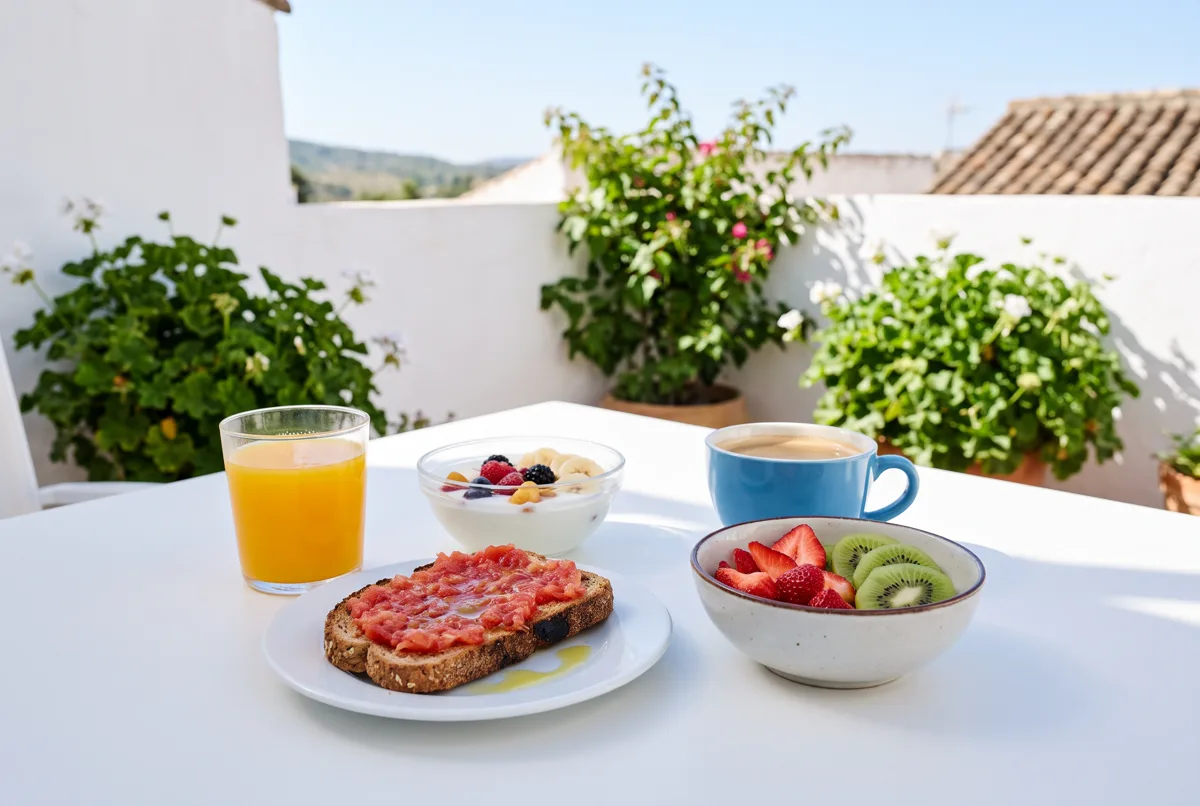
For dessert, seasonal fruit. For breakfasts and afternoon snacks you can keep two or three fixed options (toast, yoghurt, fruit, a sandwich) so you don't have to think.
How to adapt it to the season
Spain's climate changes what you feel like eating a great deal. In summer, gazpacho (a cold tomato soup), salmorejo (a thicker chilled tomato soup), pulse salads and grilled fish work best. In winter, hearty stews, hot puréed soups and casseroles are more appealing. The structure of the week can stay the same; only the recipes change.
If your priority is to spend little, there is another example designed for that in the article on the budget family weekly menu with a shopping list.
And when all the planning leaves your head full, it doesn't hurt to treat yourself to a quiet moment before you start cooking.
Tricks to cook less without eating worse
A balanced menu doesn't have to mean being in the kitchen every single day. These ideas save time:
- Cook double. If you make lentils or a stew, prepare enough for two meals and freeze one portion.
- Ready-made bases. A sautéed tomato and onion base, a Spanish-style ratatouille or a tray of roasted vegetables can be used for several different dishes during the week.
- Jarred cooked pulses. This is a practical option for busy days: you just rinse them and add them to a salad or a stir-fry.
- Useful frozen foods. Frozen vegetables and fish solve many dinners.
- Leftovers with a plan. Set aside one day of the week to use up whatever is left.
If you feel like cooking almost everything in a single afternoon, this guide to weekly batch cooking shows you how to organize the preparations. And to make sure everything keeps well until the day it's needed, it helps to know how to organize your fridge so food lasts longer.
The shopping list and the budget
The menu and the shopping list go together. When you make the list from the menu, you shop with a purpose and it's harder for products to pile up and end up in the bin.
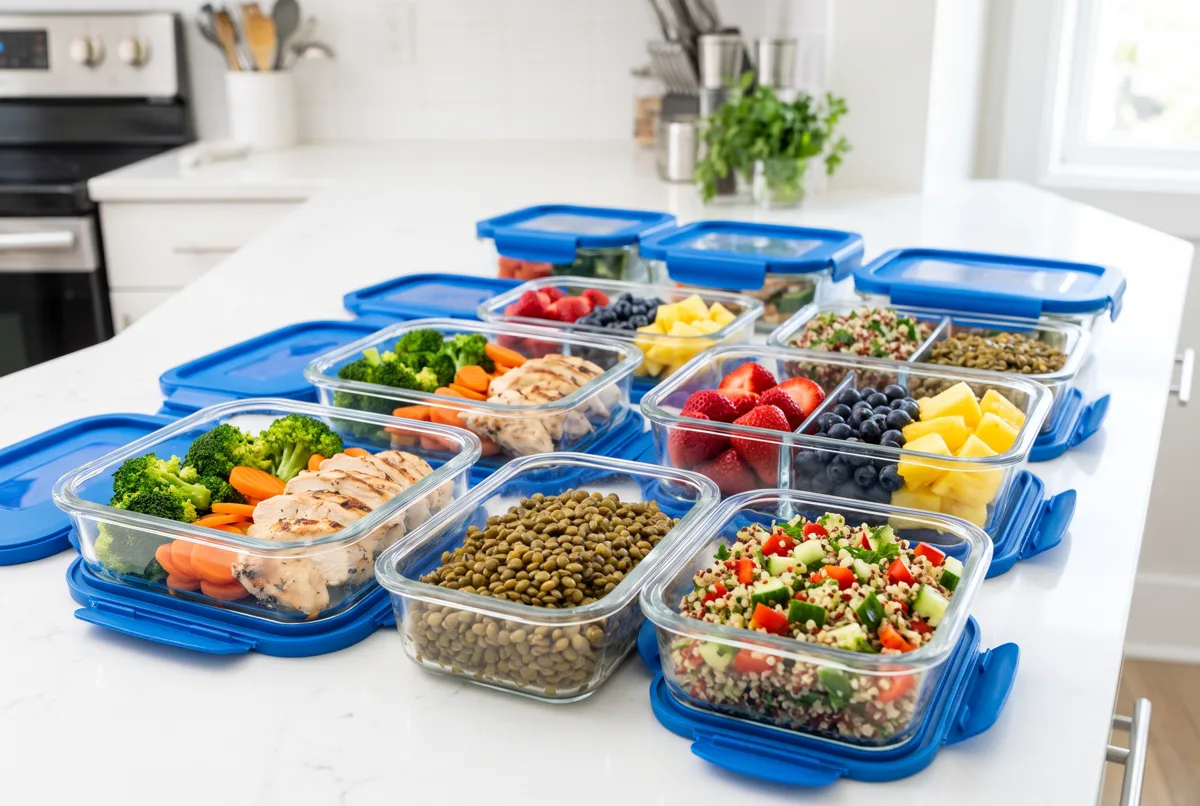
How to make the list from the menu
- Go through the menu day by day and write down the ingredients for each dish.
- Cross off what you already have at home.
- Group by section: fruit and vegetables, fish counter, butcher, chilled items, pantry, frozen foods.
- Add the staples that always run out: oil, bread, milk, eggs.
In this article you'll find more ideas for making a basic shopping list you will actually use.
Ideas to keep the menu from getting expensive
Weekly spending depends a lot on the number of people, the area and where you shop, so there is no single figure that works for everyone. What generally tends to help:
- Pulses, eggs and seasonal vegetables are usually inexpensive per portion.
- Oily fish and frozen fish are usually more affordable than other options.
- Buying seasonal fruit and vegetables gets you the best balance of price and flavor.
- Noting down what you spend each week lets you see whether the menu fits your monthly budget.
Common mistakes when planning the weekly menu
- Planning dishes that are too elaborate. If every day demands an hour of cooking, the plan falls apart by Wednesday. Mix long recipes with ten-minute dishes.
- Not allowing for the unexpected. Leave a wildcard dinner or a leftovers day.
- Always repeating the same thing. Having eight or ten go-to dishes is fine, but rotate them and add a new one now and then.
- Forgetting who eats at home. The menu has to appeal to the people who will eat it; if the children aren't convinced by a dish, try preparing it another way.
- Making the menu and not looking at it. If it ends up in a drawer, it's useless. Put it where you can see it.
Frequently asked questions
How many times a week should you eat pulses?
As a general guide, about three or four times a week, spread across lunches and dinners. You can have them in a stew, in a salad or in a puréed soup.
Does a balanced weekly menu have to include meat every day?
No. The idea is to alternate pulses, fish, eggs and meat throughout the week, so that none of them is the star every day.
How long does it take to make a weekly menu?
The first few times it may take you half an hour or a little more. With practice and a list of go-to dishes, it comes down to a short session at the weekend.
What do I do if I don't feel like what's planned for a given day?
Swap it with another day of the week. The menu is a guide, not an obligation; what matters is that by the end of the week the distribution is still varied.
How do I make a weekly balanced menu if I eat out at midday?
Plan only the dinners and think about compensating: if you eat at work at midday, prioritize vegetables in the evening, along with whatever you have eaten least during the week, such as pulses or fish.