
If you are wondering what temperature to set your heating to in Spain to save money without feeling cold, the most common reference is this: between 19 and 21 °C during the day in the rooms where you spend your time, and between 15 and 17 °C at night or when nobody is home. These are guideline figures that many people find comfortable in ordinary winter clothing, and they often make the difference between a reasonable bill and one that shoots up in January.
There is no magic number that works for every home. The climate where you live (a flat in Burgos is not the same as one in Málaga), insulation, orientation, the type of heating and, of course, who lives with you all play a part. That is why, rather than a fixed figure, we suggest a starting point and a simple way to adjust it.
In this article you will see what temperature to set depending on the time of day and the type of system you have, whether it is better to switch the heating off or leave it on, and several tricks to feel comfortable with one or two degrees less. All figures are approximate and as of publication: actual spending depends on your tariff, your home and your habits.
What temperature to set the heating to: the general reference
In Spain, a temperature of around 19 to 21 °C at home is usually taken as the winter comfort reference. To give you an idea, over the last few winters, heating limits of around 19 °C have been applied in public buildings and in many shops and businesses. If you want to know the specific rule currently in force, the best thing is to check the official information from the national government or from your regional government (comunidad autónoma), because these measures can change.
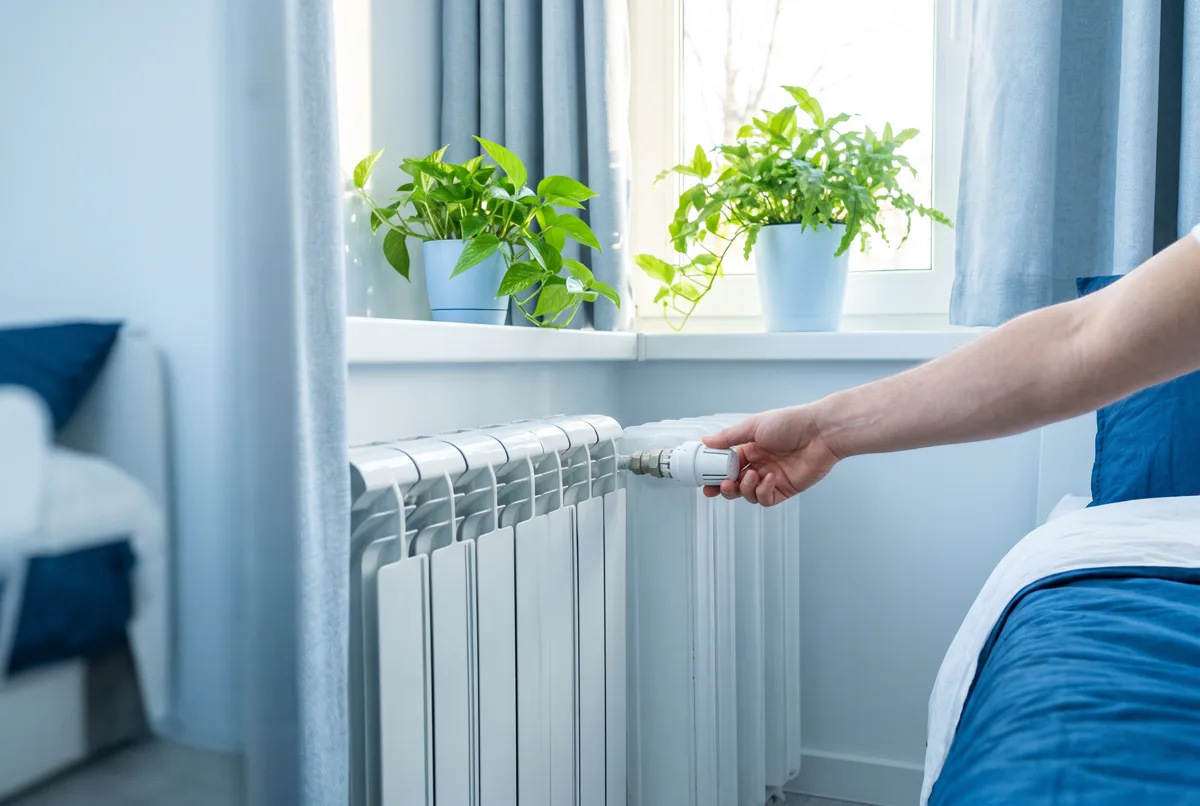
An idea that appears often in energy-saving guides is that every extra degree on the thermostat noticeably increases consumption; people often mention around 7% per degree. Take it as a guideline, not an exact figure: in your home it may be more or less. What is common sense is that going from 23 to 20 °C usually shows up on your bill.
Guideline table by time of day
| Time or room | Guideline temperature | Comment |
|---|---|---|
| Living room and daytime areas | 19-21 °C | With a sweater and winter loungewear |
| Bedrooms at night | 15-17 °C | With a suitable duvet or blanket |
| Absences of a few hours | 15-17 °C | Turn it down rather than fully off, depending on the system |
| Absences of several days | Off or frost protection mode | Especially in very cold areas |
| Bathroom at shower time | 20-22 °C for a while | Only for as long as needed |
If there are babies, older people or anyone with a specific health condition at home, the right temperature may be different. In that case, ask their healthcare professional and adapt these figures to what they advise.
What temperature to set the heating to at night and when you are out
At night your body needs less warmth from the room because you are under the duvet. Lowering the thermostat to around 15-17 °C, or switching the heating off if your home holds heat well, is one of the simplest ways to spend less.
- Schedule the drop half an hour or an hour before you go to bed: the house takes time to cool down and you will not notice.
- Schedule the rise a little while before you get up, so you do not have to turn it up full blast in the morning.
- If you go out to work, in many homes it pays to leave a low temperature (15-16 °C) instead of switching off completely, especially if the house is cold or the system has a lot of thermal inertia.
- If you are away for several days, switch it off or use the frost protection mode if your boiler or thermostat has one.
What you should avoid is coming home to an icy house and turning the thermostat up to 25 °C thinking it will heat up faster. In most systems the house warms up at the same speed; all you achieve is overshooting the temperature and spending more.
Noting down when the heating goes up and down for a week or two helps a lot to see which schedule works for you; a weekly planner or a simple sheet on the fridge is enough to get started.
Depending on the type of heating you have
The target temperature is similar in all cases, but the way to reach it changes depending on the system.
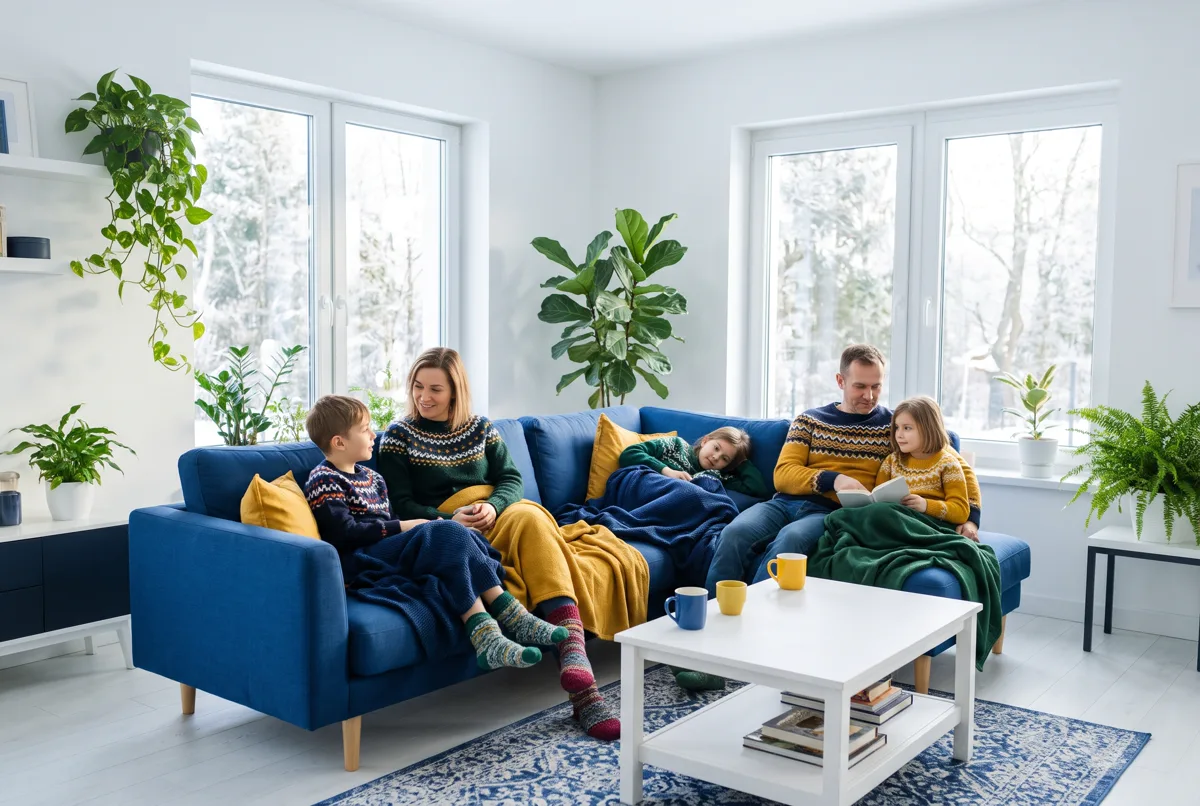
Gas boiler with radiators
This is very common in Spanish flats. The practical approach is to use a programmable thermostat and thermostatic radiator valves, if you have them, so that the rooms you do not use stay cooler. Bleed the radiators at the start of winter: if they make noise or are cold at the top, they heat less well.
Heat pump or air conditioning with heating mode
They tend to work better with a steady temperature than with abrupt switching on and off. Setting them to around 20 °C and letting them hold that temperature is usually more efficient than running them at full power for a while. If you would like to see how the system works in summer, you can read what temperature to set your air conditioning to in order to spend less, because the principles are similar.
Electric radiators and heaters
Here the cost goes straight onto your electricity bill. Use them only in the room where you are, with the door closed, and take advantage of the cheaper hours if your tariff has time bands. In the guide on how to save on your electricity bill in Spain you will find more ideas for checking your contracted power (the maximum power capacity set in your contract) and your usage times.
Underfloor heating
It has a lot of thermal inertia: it takes a while to heat up and to cool down. The usual approach is to leave it at a constant, moderate temperature, without big changes between day and night.
Shared central heating
If you live in a building with central heating, the schedule and the water temperature are decided by the homeowners' association (comunidad de propietarios). Inside your home you can adjust things with the radiator valves. In many buildings the cost is split according to each home's consumption; ask your property manager or your homeowners' association how it works in your case.
Leave it on all day or switch it off: what usually pays off
This is one of the most common questions, and the answer depends on your home. As a guideline:
- Well-insulated home and short absences: lowering it a few degrees is usually enough; the house does not lose much heat.
- Poorly insulated home and long absences: switching off or turning it down a lot usually pays off, because keeping the heat in costs more.
- Systems with a lot of inertia (underfloor heating, some heat pumps): a steady, moderate temperature is better.
- Electric radiators: turn them on only when and where you need them.
The best way to find out is to experiment. For two weeks, stick to one schedule and note down your meter readings or the consumption your energy company shows you; then try another schedule and compare. Bear in mind that the cold is not the same every week, so the comparison is approximate.
And when the house is finally warm and you sit down on the sofa, it is also a good time to slow down: some people prefer a book, a herbal tea or a little while of something relaxing on their phone.
Tricks to feel comfortable with one or two degrees less
Turning the thermostat down is easier if the house holds its heat and you are dressed warmly. These measures cost next to nothing:
- Air the house briefly and well: around 10 minutes a day is usually enough, preferably in the middle of the day, when it is less cold outside.
- Make use of the sun: raise the blinds and open the curtains during sunny hours on south- or west-facing windows.
- Close up at dusk: lower the blinds and draw the curtains as soon as the light goes.
- Block draughts: draught excluders on doors and windows, or simply a long cushion at the foot of the door.
- Do not cover the radiators with furniture, long curtains or clothes drying on top of them.
- Close the doors of the rooms you do not use and lower the temperature there.
- Dress the house for winter: rugs, blankets on the sofa and thicker bedding.
- Dress in layers: a sweater and thick socks can make 19 °C feel very different.
If you want a full rundown of measures for the whole season, you will find more ideas in how to save on heating in Spain this winter.
How to organize yourself to keep heating costs under control
Heating is a variable expense concentrated in a few months, so it is worth planning for. Some practical ideas:
- Look at last winter's bills and note down roughly how much you paid each month.
- Set aside a monthly amount in your budget from autumn, so that December, January and February do not catch you by surprise.
- Have your boiler or equipment serviced when due; check with your technician or with the rules of your regional government (comunidad autónoma) on how often.
- Set reminders to bleed the radiators, change the schedule when the real cold starts and check your consumption halfway through the month.
If you keep track of your finances on your phone, in the Canvartin: Agenda & Appointments app you can note down electricity and gas costs and create reminders for these seasonal tasks. And to fit this expense in with the rest of your household finances, the guide on how to make a monthly household budget in Spain may help.
Common mistakes that make you spend more
- Turning the thermostat up to the maximum to heat up faster.
- Having the heating high and a window ajar at the same time.
- Heating the whole house equally when you only use two rooms.
- Not scheduling anything and relying on remembering to switch it on and off.
- Walking around the house in short sleeves in the middle of winter and making up for it with extra degrees.
- Forgetting to bleed the radiators or have the boiler checked.
Frequently asked questions
What temperature should I set the heating to in order to save money?
As a guideline, between 19 and 21 °C during the day and between 15 and 17 °C at night. Adjust according to your area, your home and what feels comfortable to you.
Is it better to switch the heating off at night?
It depends on the insulation and the system. In many homes it is enough to turn it down to around 15-17 °C; if the home holds heat well, switching it off can also be an option.
How much do you save by turning it down one degree?
An exact figure for your home cannot be given. An approximate saving of around 7% per degree is often quoted, but it depends on the climate, the home and the tariff.
What temperature should I set if I am out for a few hours?
For short absences, turning it down to around 15-17 °C is usually reasonable. For several days, switch it off or use the frost protection mode.
Is there a mandatory maximum temperature at home?
In private homes, you decide the temperature. The limits that have been applied affect public buildings and certain businesses; check the official source for the rule currently in force.