
Coloring mandalas is relaxing for adults because it combines repetition, visual focus and a simple hands-on task that doesn't ask you to make big decisions. To get started, all you need is a sheet with a design you like, some pencils or markers, and 10 or 15 minutes without expecting it to turn out perfect.
Coloring mandalas is not a magic fix for stress, and it doesn't replace professional help if you're going through a difficult time, but it can be a very pleasant stress-relief activity to do at home. It works especially well when you need to slow down after work, switch off from screens, or have a quiet moment before bed.
The key is to keep it easy: few materials, a comfortable spot and a realistic routine. If you turn it into one more obligation, it loses part of its charm. If you use it as a gentle break, it can become a small self-care ritual.
Why coloring mandalas helps adults relax
A mandala is a drawing, usually circular, with shapes repeated around a center. That orderly structure makes it easy to focus on one small area and move forward bit by bit, without having to invent anything from scratch.
When you color, your attention is split between choosing a color, filling in spaces and following the pattern. It's simple enough not to overwhelm you, but engaging enough to pull your mind away from your to-do list.
Here are some of the reasons many people find it relaxing:
- Repetition: coloring similar shapes over and over can be calming.
- Attention to detail: it focuses you on one specific, visible action.
- Sense of progress: every area you color gives a small feeling of satisfaction.
- Low pressure: you don't need to know how to draw or have any artistic experience.
- Slow pace: it invites you to slow down, especially if you do it without rushing.
It can also help if you find it hard to stop. Some days, sitting down to meditate or to do nothing feels difficult, but coloring seems manageable. In that case, mandalas can be a way into moments of calm. If you're looking for more simple ideas, you can also read how to relax your mind and stop thinking about everything.
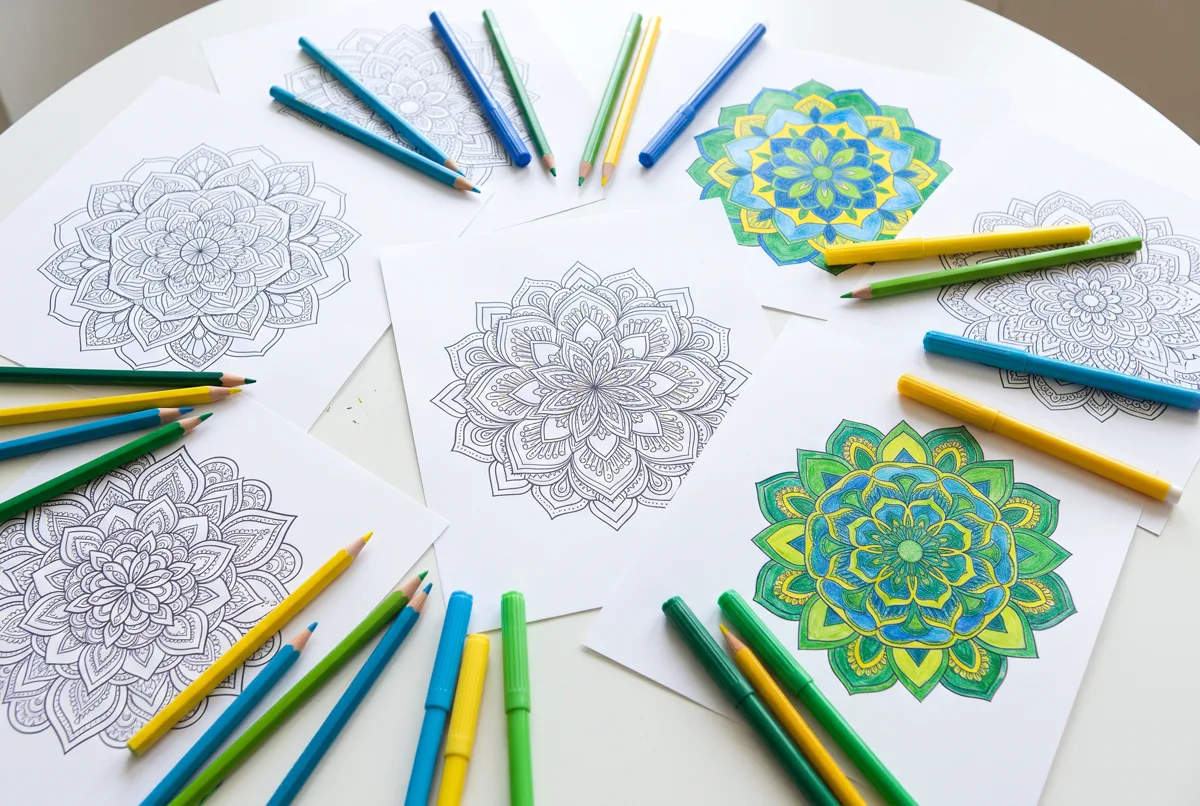
What you need to get started without spending much
You don't need to buy a huge set or fill a drawer with supplies. In Spain you can find mandala books, loose sheets or printable designs. The prices are approximate, as of publication, and may change depending on the store, the area and the quality of the material.
| Material | What it's for | Approximate price |
|---|---|---|
| Basic colored pencils | Starting out with control and without bleeding through the paper | Approximately 3 to 10 euros |
| Fine-tip markers | Bright colors and small details | Approximately 4 to 12 euros |
| Mandala coloring book | Having designs ready to go without printing | Approximately 5 to 15 euros |
| Printable sheets | Choosing individual designs and repeating the ones you like | Depends on ink, paper and file |
| Folder or envelope | Keeping sheets you've started and finished | Approximately 1 to 5 euros |
If you're going to print mandalas at home, a regular A4 sheet (the standard European paper size, slightly longer and narrower than US Letter) works well for colored pencils. If you use markers, you may want slightly thicker paper to stop the ink from bleeding through. In this guide to paper types and sizes for printing at home you'll find a practical explanation of A4, A5 and paper weight.
To keep things simple, pick one of these combinations:
- Minimal option: one printed sheet and 6 colored pencils.
- Comfortable option: a mandala book and a box of 12 colors.
- Option for detail work: fine-line mandalas and fine-tip markers.
- Gentle option: watercolor pencils used dry, without bothering with water.
If you like to fit your coloring time into a routine, you can book it in your planner as a short break, just as you would note down an appointment or a household task.
How to choose mandalas for your level and your mood
Not every mandala relaxes everyone in the same way. Some have large spaces and are very easy, while others are so detailed that they can wear you out if you start with them. The best approach is to choose based on how you feel that day, not on how pretty the finished drawing looks.
If you're tired
Choose mandalas with big shapes, few layers and wide areas. They're perfect for the evening, after work, or after a day of errands, kids, shopping and housework. They don't force you to keep up excessive precision.
If you need to focus
Look for designs with medium-sized details, geometric patterns or repeated flowers. They keep you busy without overloading you. They can suit a Sunday afternoon or a long break with quiet music.
If you fancy a challenge
Try mandalas with fine lines, lots of tiny gaps and complex symmetry. It's best to save them for days when you have patience and good light. If you do them in a rush, they can easily feel tedious.
A good rule of thumb is to look at the mandala for 10 seconds. If you feel like starting with a particular area, go for it. If just looking at it stresses you out, find a simpler one.
A 15-minute routine for coloring and switching off
Coloring mandalas can be spontaneous, but having a short routine helps a lot if you struggle to find time. You don't need a whole afternoon. In 15 minutes you can feel a real pause in your day, even if the drawing stays half finished.
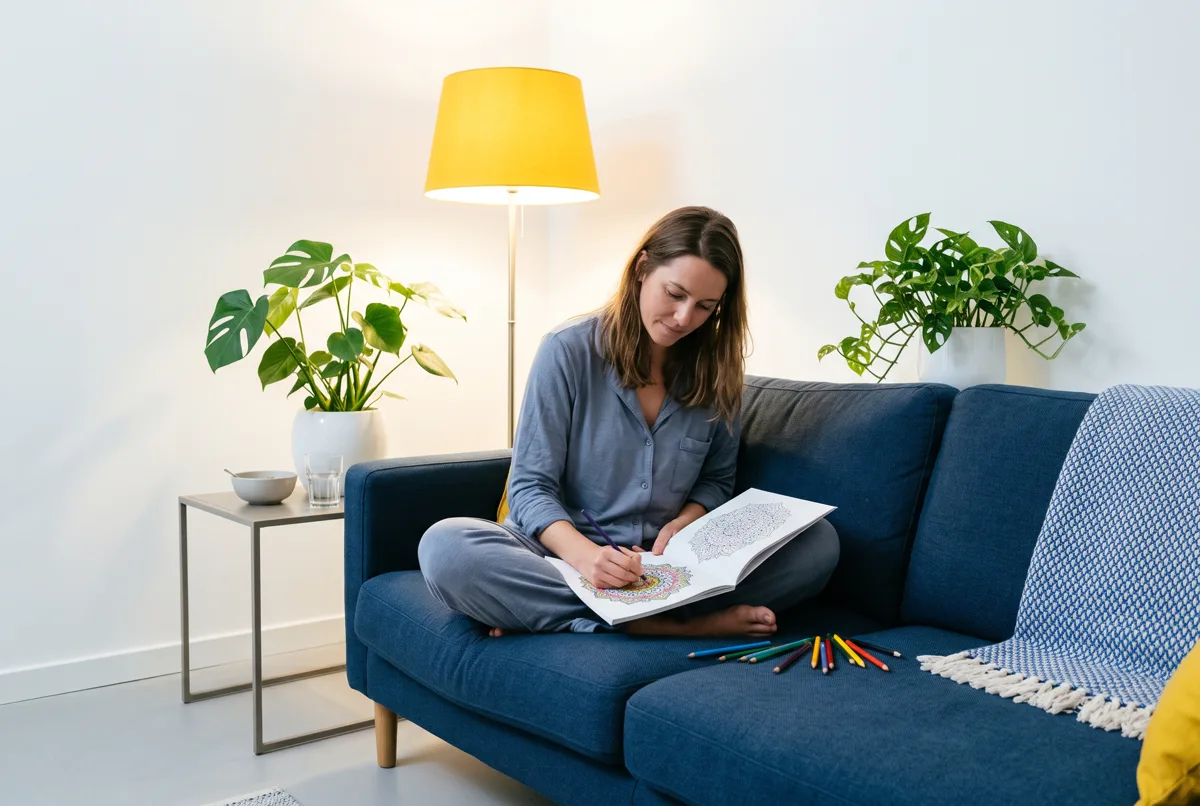
- Set up your space: clear a corner of the table, get good light and keep your phone away if you can.
- Pick just 3 or 4 colors: that way you avoid wasting time deciding.
- Start from the center or from the edge: either works, but keeping to an order helps.
- Color without correcting everything: if you go a little outside the lines, keep going. It's not an exam.
- Stop when time is up: even if you don't finish, put the sheet away for another day.
If you like, you can pair the activity with a hot drink, a playlist of soft music or the sound of rain. If you're interested in other ways to rest quietly at home, take a look at these relaxing activities for adults at home.
You can also try an evening routine:
- 10 minutes to tidy up the essentials in the kitchen or living room.
- 5 minutes to prepare the basics for the next day.
- 15 minutes of coloring with no screen.
- A few minutes of reading or calm breathing before bed.
If you need to organize your breaks, the app Canvartin: Planner and Appointments lets you note down tasks, habits and reminders, and also print A4 planners from your phone, blank or already filled in, with the Premium feature or as a reward.
Color ideas so you don't get stuck
One of the most common questions when starting out is: which colors should I use? The simple answer is that there are no rules. Even so, having a few palettes ready stops you from staring at the box of pencils without deciding.
Soft palette
- Light blue
- Aqua green
- Soft yellow
- Light pink
It works well for floral mandalas or for moments when you want something calm and bright.
Contrast palette
- Dark blue
- Yellow
- Vivid green
- The white of the paper as a resting space
It works well if you want the mandala to look bolder without using too many colors.
Seasonal palette
In Spain, you can take inspiration from the time of year. In spring, greens and flowers. In summer, blues, yellows and fresh tones. In autumn, oranges, dark greens and soft reds. In winter, deep blues, violets and a touch of something light.
To keep it simple, try this technique: choose one main color, one secondary color and one accent color. For example, green as the base, blue as support and yellow for small details. Repeat the combination in different areas and the result will look more orderly.
How to print mandalas to color for adults at home
If you search for mandalas to color for adults, you'll see designs in many styles: geometric, floral, with animals, simple, very detailed, or made for beginners. Before printing, check that the drawing is good quality with clear lines.
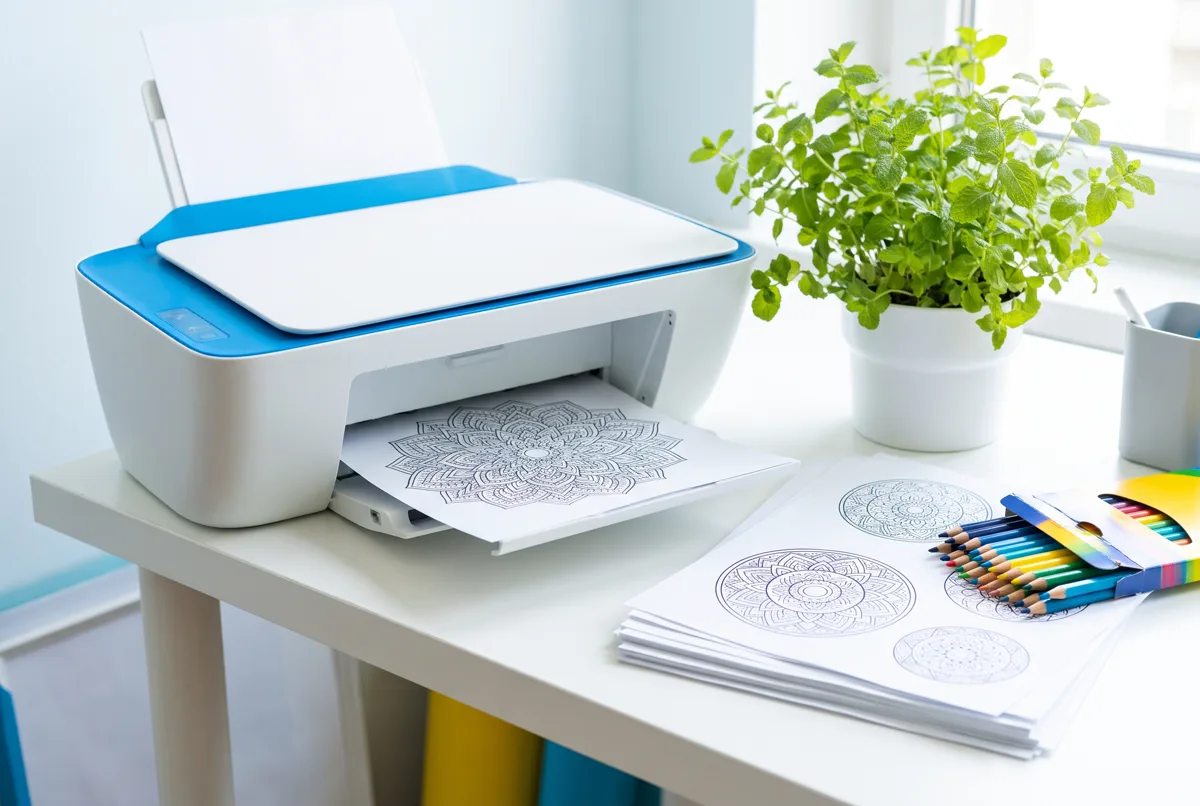
To print at home without wasting paper, follow these general steps:
- Save the file on your phone or computer.
- Check that the size is A4 if you want a full sheet.
- Choose black-and-white printing if the drawing only has lines.
- Do a test with a single page before printing several.
- If you're going to use markers, put a sheet underneath while you color.
If you usually print from your phone, this guide to how to print from your phone step by step will be useful. And if one day you want to create a small booklet with several designs, you can check out how to print a PDF as a book or booklet at home.
A practical tip: keep your printed mandalas in a folder divided into three groups: to do, started and finished. That way they don't get mixed up with bills, children's drawings or other papers around the house.
Common mistakes when starting out and how to avoid them
Coloring mandalas seems very simple, but there are small details that can make you give up early. Most of them can be solved by lowering your expectations and preparing the moment better.
- Choosing a design that's too difficult: start with medium or large spaces.
- Buying too many supplies at the beginning: try first with what you have at home.
- Wanting to finish it in one sitting: it can take you several days, and that's fine.
- Comparing yourself with perfect photos: your mandala doesn't have to look like it belongs in a shop window.
- Coloring in poor light: it tires your eyes and makes you lose patience.
- Treating it as an obligation: if you don't feel like it today, you can swap it for another quiet activity.
It's also worth remembering that the goal isn't to produce something beautiful, but to give yourself a stretch of calm attention. If the result looks uneven, it's still valid. If it helps you slow down a little, it has already done its job.
If you enjoy activities like this, you may also like stress-relief games, especially when you want something short and repetitive. Along those lines, Canvartin: Home Simulator is a calm game for your phone with small household chores, like looking after plants or washing dishes, accompanied by relaxing sounds.
How to turn it into a habit without it becoming one more chore
For coloring mandalas to last over time, it has to be easy to start and easy to put down. Don't set it up as a daily obligation if your schedule is already full. It's better to fit it into specific gaps in your week.
Some realistic ideas:
- After lunch: 10 minutes if you work from home or have a quiet break.
- Before bed: 15 minutes in soft light, avoiding screens right beforehand.
- Sunday afternoon: a slow stretch of time to wrap up the week.
- While listening to an audio: as long as it doesn't get you too wound up.
- On a rainy afternoon: as a simple, inexpensive plan at home.
You can also put together a small tray or box with everything you need: sheets, pencils, a sharpener and a folder. If you have to hunt for supplies all over the house every time, you're more likely to give up.
Another option is to link it to a habit you already have. For example: after I lay out tomorrow's clothes, I color for 10 minutes. Or after I tidy the kitchen, I work on one corner of the mandala. The more specific the moment, the less willpower you need.
Frequently asked questions
Is coloring mandalas for adults good for anxiety?
It can help you relax for a while, but it isn't a treatment. If anxiety limits you in your daily life, talk to a health professional.
Is it better to color mandalas with pencils or markers?
To start with, pencils are easier to control and don't usually bleed through. Markers give more vivid colors, but it's best to use slightly thicker paper.
How long should I color each day?
10 or 15 minutes can be enough to create a pause. There's no required length; what matters is that it doesn't become a burden.
Where can I find mandalas to color for adults?
You can use books, loose sheets or printable files. Choose clear, good-quality designs that match how patient you feel that day.
Do I have to finish the mandala for it to be relaxing?
No. You can leave it half done and pick it up again whenever you like. The benefit is in the process, not only in seeing the finished drawing.